

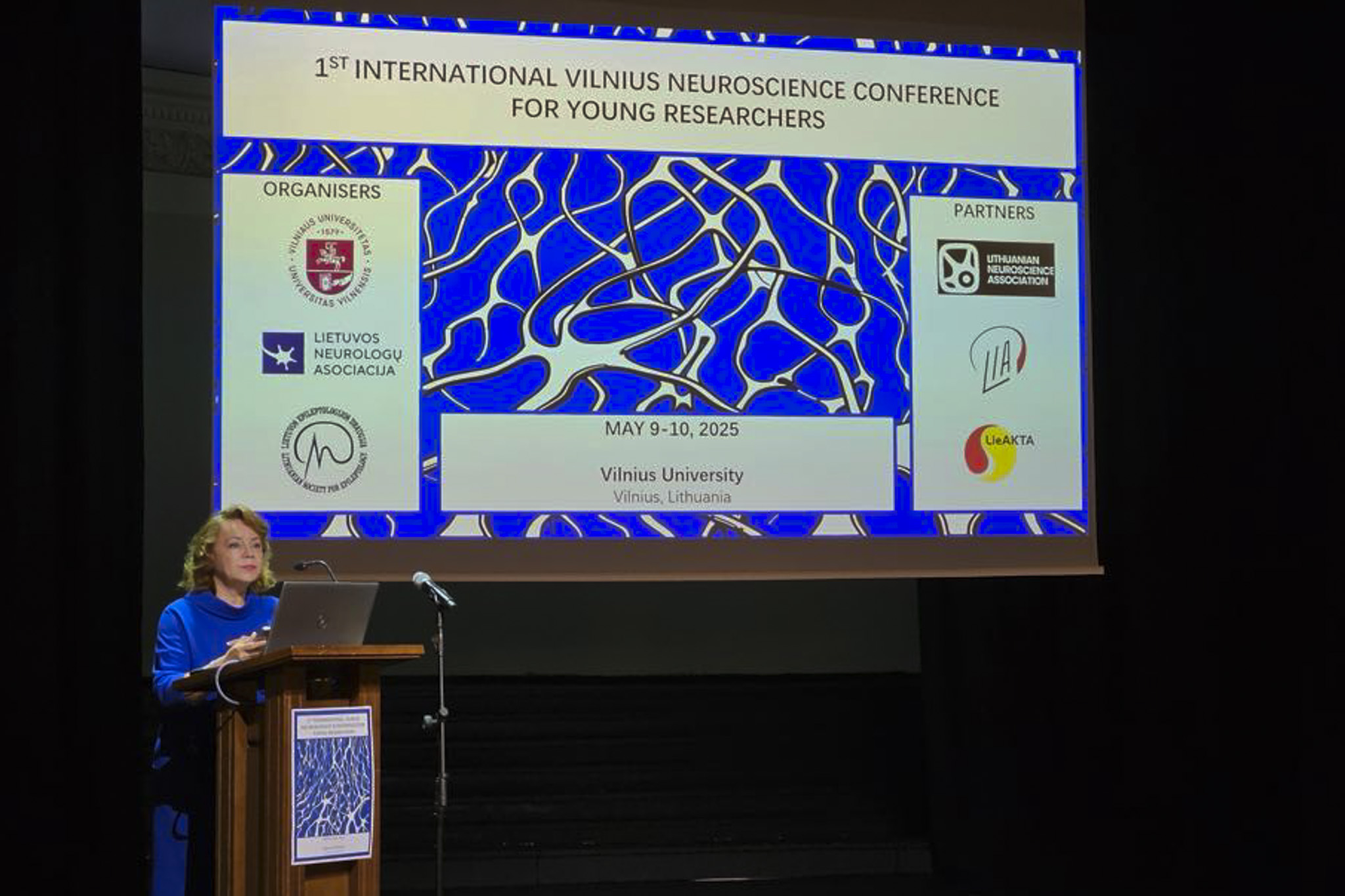
 Prof. Dr Rūta Mameniškienė / Photo by organisers
On 9–10 May 2025, the 1st International Vilnius Neuroscience Conference took place at the Theatre Hall of Vilnius University (VU). The aim was to attract young researchers interested in clinical neurology, neurosurgery, psychiatry, and the associated areas of science and promote the sharing of experience and knowledge between scientists and the younger generation. The event was organized by researchers from the Faculty of Medicine at Vilnius University (VU MF) in cooperation with the Lithuanian Society for Epileptology, the Lithuanian Association of Neurologists, the Lithuanian Neuroscience Association, the Lithuanian Stroke Association and the Lithuanian Association of Apheresis and Clinical Toxicology.
The conference opened with the welcome address given by a professor from the Clinic of Neurology and Neurosurgery at the Faculty of Medicine, Prof. Dr Rūta Mameniškienė, Dean of the Faculty of Medicine Prof. Dr Dalius Jatužis, and VU Pro-Rector for Research, Prof. (HP) Dr Gintaras Valušis. They encouraged the young participants not to lose their curiosity, present their activities courageously, and join active discussions throughout the conference. According to the main organiser of the conference, Prof. Mameniškienė, ‘taken broadly, the neurosciences connect representatives from particularly diverse fields – scientists involved in fundamental research and specialists of neurology, neurosurgery, and mental health. Moreover, there are close links with other clinical specialities, for example, toxicology. They all have a common goal – to reveal the functioning of the brain and find ways to effectively prevent or treat diseases of the nervous system.’ She also added that based on the field represented, the research methods employed, the narrower interests and scientific points of view differ significantly. ‘As we have been observing for a long time with the persisting interest in neurosciences among the youngest members of the academic community, and when you consider that brain health has been increasingly actualised as one of the major health objectives of our society, the idea emerged to organise a separate conference for the young researchers devoted to neurosciences that would have a common theme and simultaneously encourage a more active interdisciplinary discussion’.
On the first day, during the plenary sessions, invited guests delivered their lectures. A professor from the Biotechnology Institute at the Vilnius University Life Sciences Centre, Prof. Dr Artūras Petronis gave a presentation on the potential significance of cyclical changes on the cellular and population levels and their implications for pathogenetic disease mechanisms. Neurologist, Prof. Dr Jatužis (VU MF) gave a lecture on the complexity of cerebral circulation and its dynamics throughout human evolution. Conference participants also had the opportunity to listen to a lecture from a toxicologist, and professor at Vilnius University Faculty of Medicine, Prof. Dr Robertas Badaras on the way science is carried out in a seemingly very practical speciality – toxicology. Prof. Dr Osvaldas Rukšėnas from the Life Sciences Center of VU discussed the most recent evidence on structural changes of the brain in the context of evolution and human development. In addition, a presentation on the challenges of scientific methods and nosology in psychiatry was delivered by Prof. Dr Sigita Lesinskienė, an adolescent psychiatrist-psychotherapist and doctor of the Child Development Centre of Vilnius University Hospital’s Santaros Clinics.
At the plenary session on the second day, a presentation was delivered by the Head of the Center for Neurosurgery at Vilnius University Hospital’s Santaros Clinics, neurosurgeon, Prof. Dr Saulius Ročka, who elaborated on the broad potential of neurosurgery science. There was also a comprehensive lecture on the components of pain by the Head of the Peripheral Nervous System and Neuromuscular Diseases Sector, Department of Neurology at the Hospital of Lithuanian University of Health Sciences Kauno klinikos and Vice Chancellor of the Lithuanian University of Health Sciences, neurologist, Prof. Dr Kęstutis Petrikonis. The session ended with an address from the specialist at the VU MF Research and Innovation Department, Kristijonas Puteikis, who spoke about the joys and challenges in a young researcher’s life.
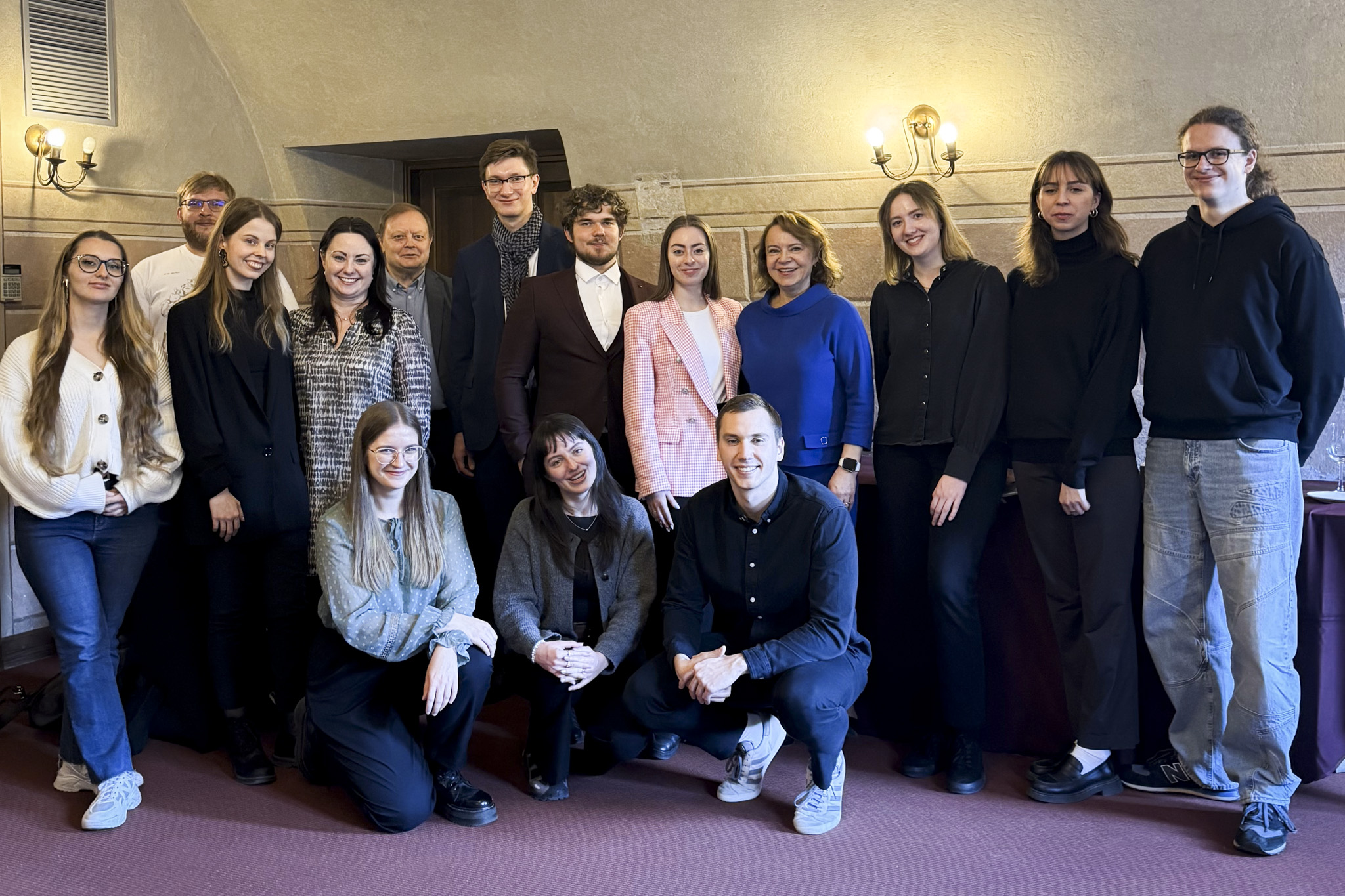 Participants of the 1st International Vilnius Neuroscience Conference / Photo by organisers
The central part of the conference – short oral presentations by the young researchers themselves – was exceptional in terms of the thematic and methodological variety of the theses presented. In total, 47 research works were presented, from fundamental C. Elegans studies and histopathological studies of the hippocampus to artificial liquor currently under development, studies of patient groups suffering from various neurological, psychiatric diseases, and also presentations on particularly rare clinical cases. The diversity of topics led to lively question and answer sessions and allowed for better understanding of the need for a shared integrated approach for representatives from different fields. All of the abstracts delivered at the conference are available to view here.
At the close of the conference, the commission made a number of awards for presentations that exhibited thematic novelty, tangible implications, methodological quality, and overall professionalism:
Place I was awarded to a research group who investigated status epilepticus, Benas Matuzevičius and Justas Dijokas (Vilnius University) for their presentations, Outcomes of Status Epilepticus: An Analysis of Causes and Predictors, and The Impact of Prehospital Factors on the Outcomes of Status Epilepticus.
Narges Mohammadrahimi from the University of Tartu with the presentation The Endocannabinoid System as a Possible Modulator of the Psychiatric Effects of the Adhesion Molecule NEGR1, and Andrius Sakalauskas from Vilnius University with the presentation, Developing Artificial Cerebrospinal Fluid for Studying Neurodegeneration-related Protein Aggregation were both placed II.
Place III went to Laima Skėrutė for her presentation, Patent Foramen Ovale and Stroke: Applying the Pascal Classification to Improve Secondary Prevention Strategies, Aida Emilija Balukonytė for her presentation, The Impact of Background Noise on Cognitive Performance and Contributing Factors (both from Vilnius University), and Nojus Staknys (Vrije Universiteit Amsterdam), for his presentation, Quantitative Comparison of C. Elegans Growth and Development in Monoxenic and Axenic Medium.
The conference revealed a significant need to develop scientific discussion that would unite neuroscientists and clinical specialists – neurology, neurosurgery, psychiatry, and toxicology – seeking to strengthen this area of brain health sciences, to attract the interest of increasingly more members of the academic community at the beginning of their career, and to ensure interdisciplinary and international cooperation. It is expected that in the future, a conference of this nature will summon even more young neuroscientists and become a hub of attraction for sharing the accumulated experience of presenters from various European countries.


