On 12 February 2026, a series of scheduled presentations on laboratories and centres of the Translational Health Research Institute (THRI) was launched at Vilnius University’s (VU) Medical Science Centre. The first presentation of the series was dedicated to the activities of the vivarium.
The Director of THRI, Prof Dr Tomas Poškus briefly presented the institute, its composition, and activities. According to Dr Poškus, one of the objectives of the event was to discover new opportunities for cooperation that will promote the development of personalised digital translational medicine.
The activities and potential of the vivarium were presented by the Laboratory Coordinator, veterinary doctor, Vytautas Baranauskas, who began by reviewing the possible alternative methods of research that should be thoroughly considered before making the decision to proceed with research involving animals. “Such activities are strictly governed by laws, which emphasise three key aspects of laboratory animal science, the so-called 3R principles: replacement, which refers to the methods employed to avoid using animals or replace them with other models; reduction, using strategies that allow the necessary scientific information to be obtained by using fewer animals; and refinement, which involves measures to reduce the pain, suffering or stress by improving the welfare of laboratory animals from their birth to the completion of the research”, explained Baranauskas. The vivarium enables the researchers to perform important scientific research while ensuring excellent animal welfare standards.
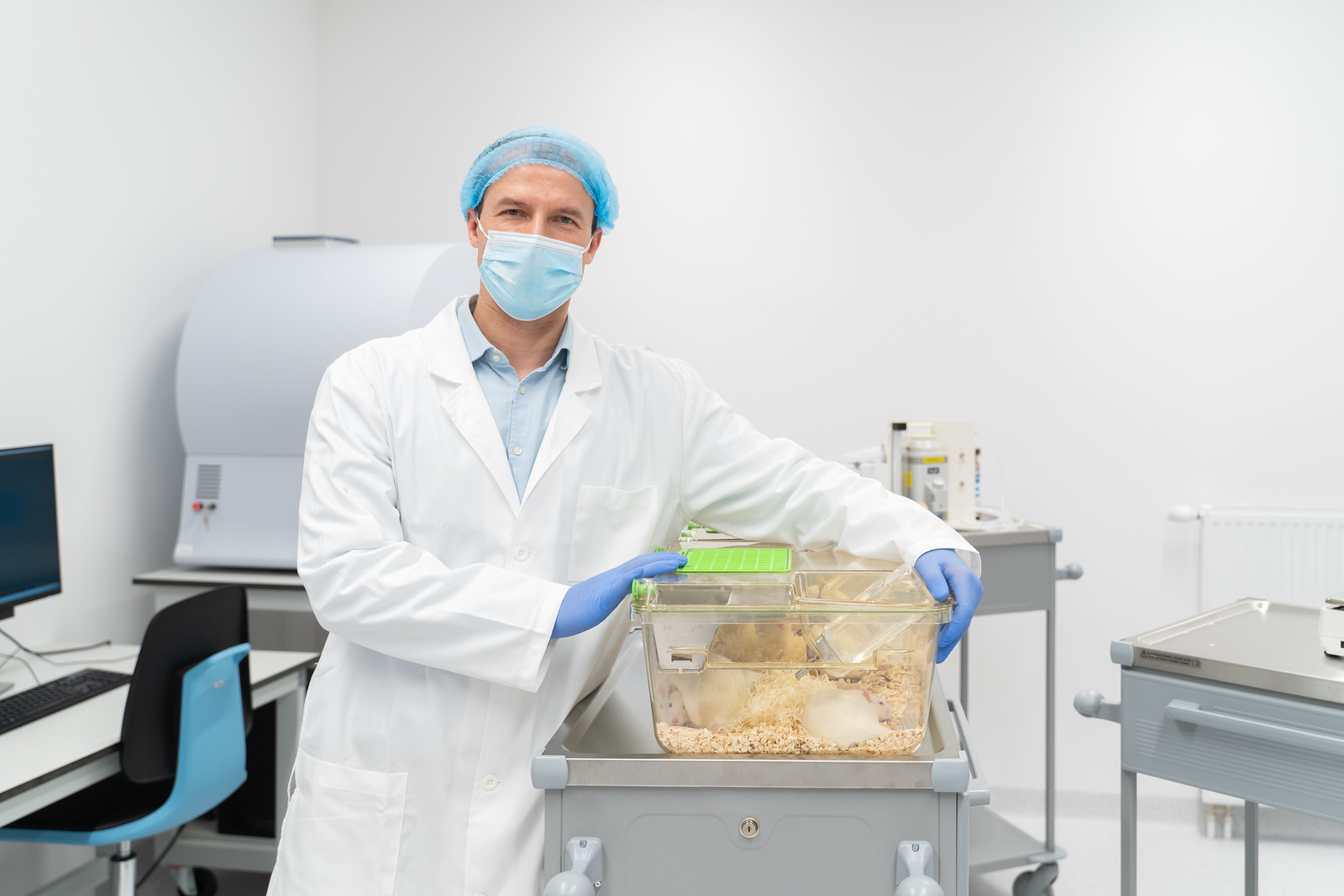
Laboratory Coordinator, veterinary doctor, Vytautas Baranauskas, MF archive
Often, when discussing laboratory animals, the question arises as to why they are still being used. According to Baranauskas, although alternatives are already applied in numerous areas, the biological complexity of animals is the key reason why such research remains relevant. The biological foundation of laboratory animals extends the possibility for examining critically important issues in a live system that reflects human biology. Furthermore, the animals used in experiments are standardised, thereby ensuring the validity of the results obtained.
Following the presentation and discussion, participants at the meeting were taken on a tour of the facility during which they could see the laboratories and the animals kept there. Coordinator of the vivarium, Baranauskas, together with technician, Gabriela Liubartaitė, showed the participants around the laboratory premises, explained the modern machinery being used and the possible procedures that are available.
The THRI vivarium is a progressive pre-trial research facility that conforms to the highest standards. It enables systematic research requiring strict precision to be conducted that allows for the comprehensive exploration of both the functional and anatomic composition of the brain network as well as the broader bioelectrical processes of the entire organism. This opens up opportunities for the analysis of complex biological phenomena when such studies in humans would be impossible.
The THRI’s series of meetings has been organised in association with the VU Health Co-Laboratory. They offer the opportunity to get to know the activities of the THRI laboratories and centres better, with the aim of strengthening mutual relationships, and initiating joint projects.