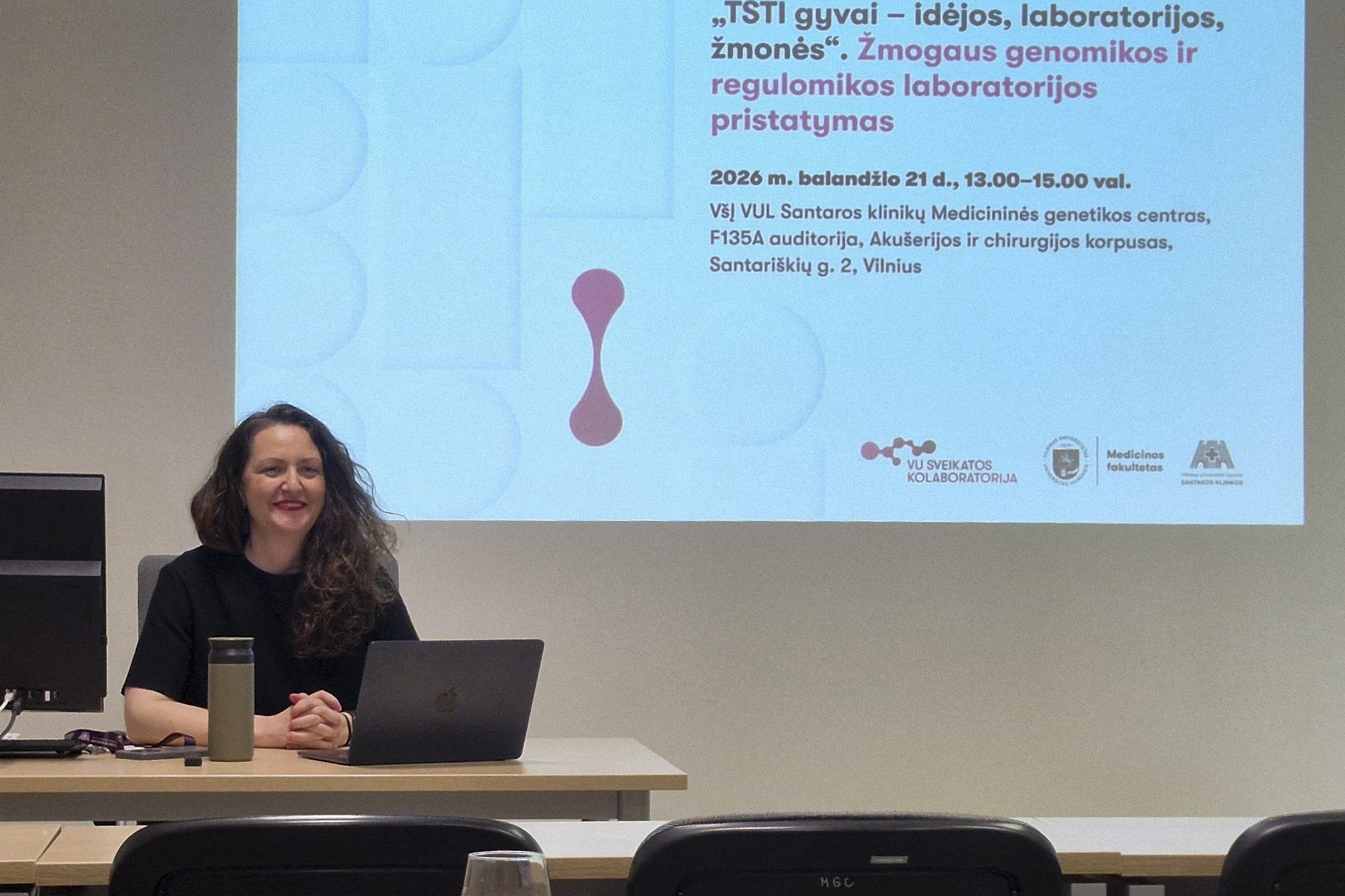
 Moment of the event / photo by Gytautė Martyna Sudeikytė
On the 21 of April 2026, the Medical Genetics Centre of Vilnius University Hospital (VUH) Santaros Klinikos hosted the third session in the series of meetings where different laboratories and centres at the Translational Health Research Institute (THRI) of the Faculty of Medicine, Vilnius University (VU), are presented. The event was dedicated to the Human Genomics and Regulomics Research Group and marked the World Medical Genetics Awareness Week.
The activities and main research areas of the Human Genomics and Regulomics Laboratory were presented by the head of the laboratory, Prof. Laima Ambrozaitytė.
Adaptive genetic mechanisms—a comprehensive study of whole genome variation in the group of the Lithuanian Chornobyl catastrophe clean-up workers (ADAPT). This project features a unique participants group, the Chornobyl clean-up workers from Lithuania. The researchers want to find out what is so special about the genomes of the research participants that despite the exposure to such high levels of ionising radiation, they age relatively healthy, as the matched general population.
Analysis of biomarkers of suicidal tendencies and depression and validation of a prognostic model in Lithuania (BIOŽYMUO). This project was provoked by the suicide rate in Lithuania. It investigates individuals who attempted suicide, people suffering from depression, and the general population. The research group is small, as this is a particularly sensitive topic and it’s difficult to find the right research participants, especially when certain biochemical markers will be analysed, along with genome data.
Foetal Single Cell Transcriptomics (FETOME). This piece of research is complicated by the lack of data for comparison—there is still not a map of foetal cells in the prenatal stage available in the world. Hence, making such a map is among the project goals.
Genome of Lithuania (g.LT). In order to implement personalised medicine, Lithuania must have the data of its population. For the purposes of patient healthcare, the three major healthcare institutions in the country: VUH Santaros Klinikos, Kauno Klinikos and the National Cancer Institute, have generated the genome data of 1,500 participants. Project participants have been selected from different contexts: VUH Santaros Klinikos have the data of the patients with rare diseases and their healthy parents, Kauno Klinikos have investigated infertile couples, patients with kidney and heart conditions, and patients with rare diseases, and the National Cancer Institute has investigated oncology patients. The essential goals of the project include data analysis, interpretation and the sharing of results, as well as an investigation into the architecture of the Lithuanian population. ‘Currently, all institutions are at the stage of intense data analysis, but one of our major goals is to establish a results sharing system so that we can use the data in patient healthcare,’ explains Prof. L. Ambrozaitytė.
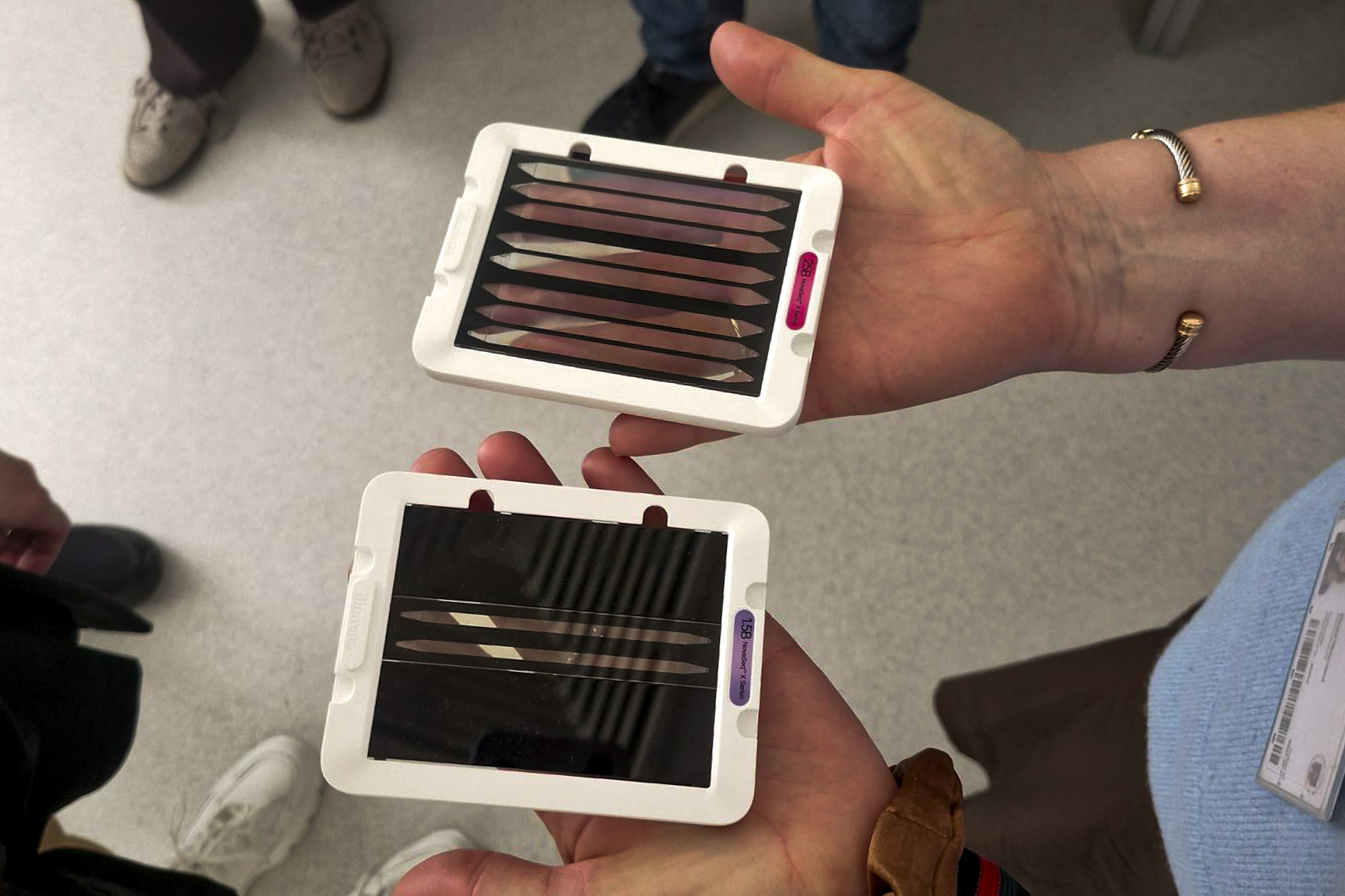 Moment of the event / photo by Gytautė Martyna Sudeikytė
The human genome consists of about 3.2 billion nucleotids, which are of four different types. Although there are only four kinds of nucleotids, their combinations, in a world population of over 8 billion people, means every person’s genome is unique, and it can undergo any change. In this context, the main challenge is not identifying but interpreting the impact of genetic changes, since current levels of data are not always sufficient.
After the presentation, participants had a chance to visit laboratories, appreciate the infrastructure, technologies, and equipment used. Research opportunities and cooperation practicalities were also discussed.
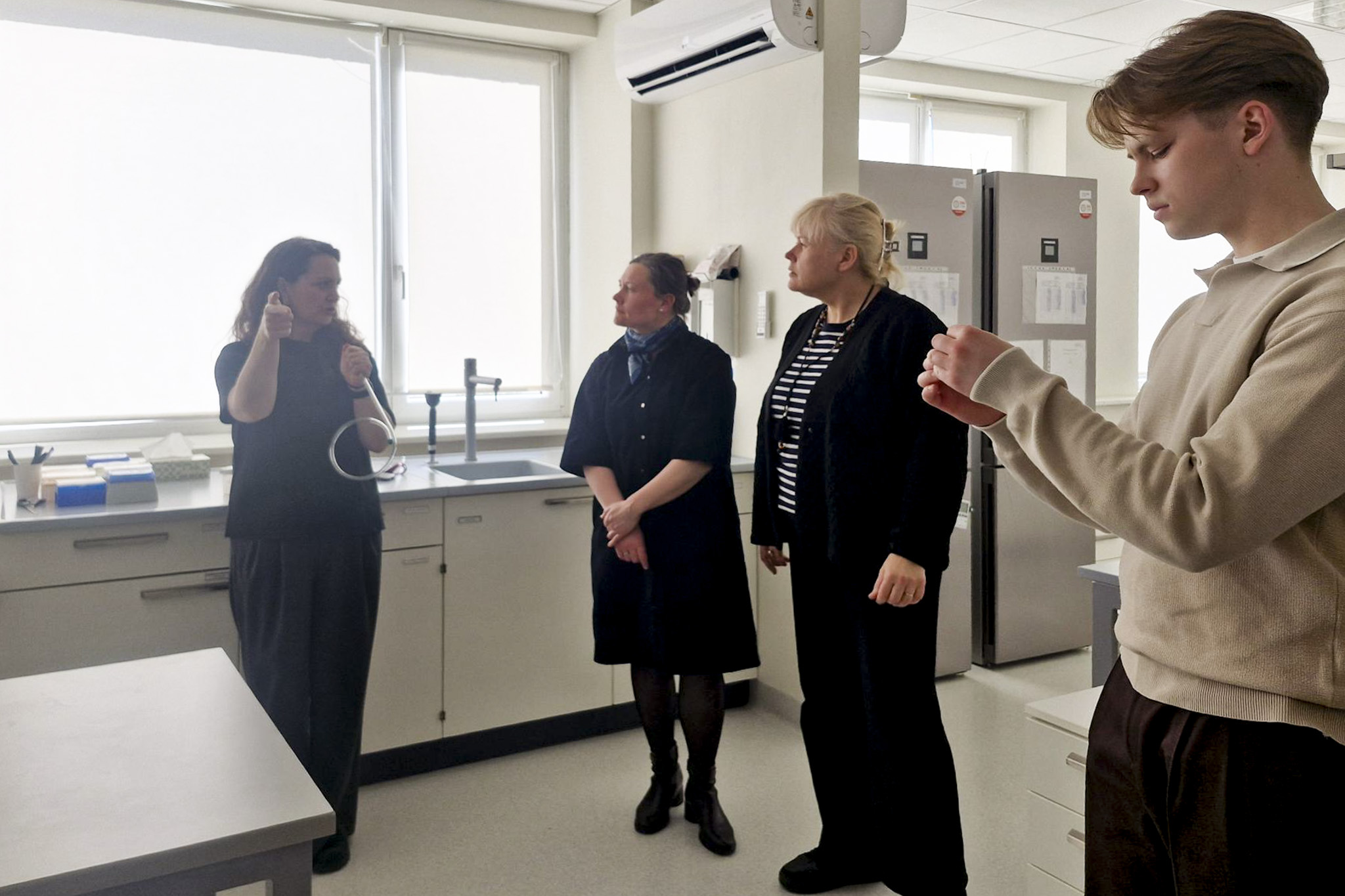 Moment of the event / photo by Gytautė Martyna Sudeikytė
The vision of the THRI’s Human Genomics and Regulomics Laboratory is a lab that applies innovative technologies and examination strategies of human genomics and regulomics and aims to apply the acquired knowledge in personalised medicine. Its mission is to research and analyse the structure and regulation mechanisms of the human genome to gain better understanding of the interplay of genome variation, gene expression, and environmental factors, and their impact on people’s health. The objectives defined to help reach these goals include developing deeper scientific knowledge in the field of human genomics and regulomics, encouraging international cooperation, and ensuring that the acquired knowledge is employed to advance personalised medicine.
The THRI meeting series is co-organised with the VU Health Co-Laboratory. This initiative provides an opportunity to get to know the institute’s laboratories and centres, strengthen interrelations, and initiate cooperative projects.