

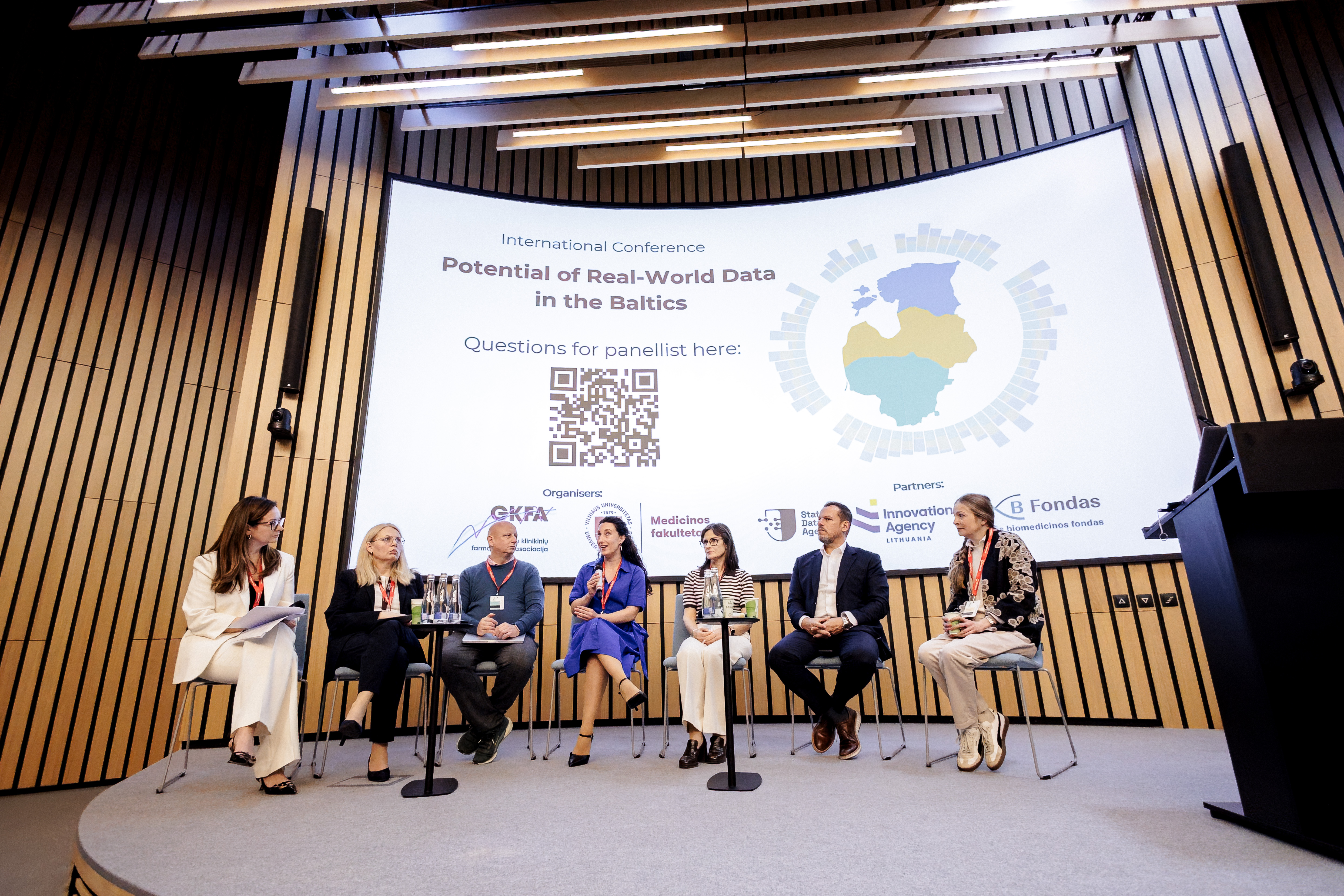
 Moment of the event / photo by Andrius Paulavičius
On 14–15 May 2026, the international conference Potential of Real-World Data in the Baltics, organised by the Faculty of Medicine of Vilnius University in cooperation with the Association of Clinical Pharmacologists, took place at the Medical Science Centre, Vilnius University. The aim of the event was to foster international collaboration and contribute to shaping future strategies in the field of health data.
The conference brought together experts from academia, public institutions, health policy organisations, and the pharmaceutical sector from Estonia, Latvia, Lithuania, Sweden, the Netherlands, Switzerland, and the United Arab Emirates to discuss the use of Real-World Data (RWD) in healthcare decision-making and research across the Baltic region. Discussions focused on RWD ecosystems, data accessibility and the secondary use of health data, the improvement of health technology assessment and reimbursement processes, as well as the application of advanced analytical methods.
Participants were welcomed by Prof. Dalius Jatužis, Dean of the VU Faculty of Medicine, who emphasised that clinical pharmacology bridges laboratory discoveries and clinical practice: “It raises not only the question of whether a medicine works under the controlled conditions of clinical trials, but also how it performs across the full diversity of real patients in real clinical settings, with all the complexity that entails. It is precisely RWD that allows us to answer this question.”
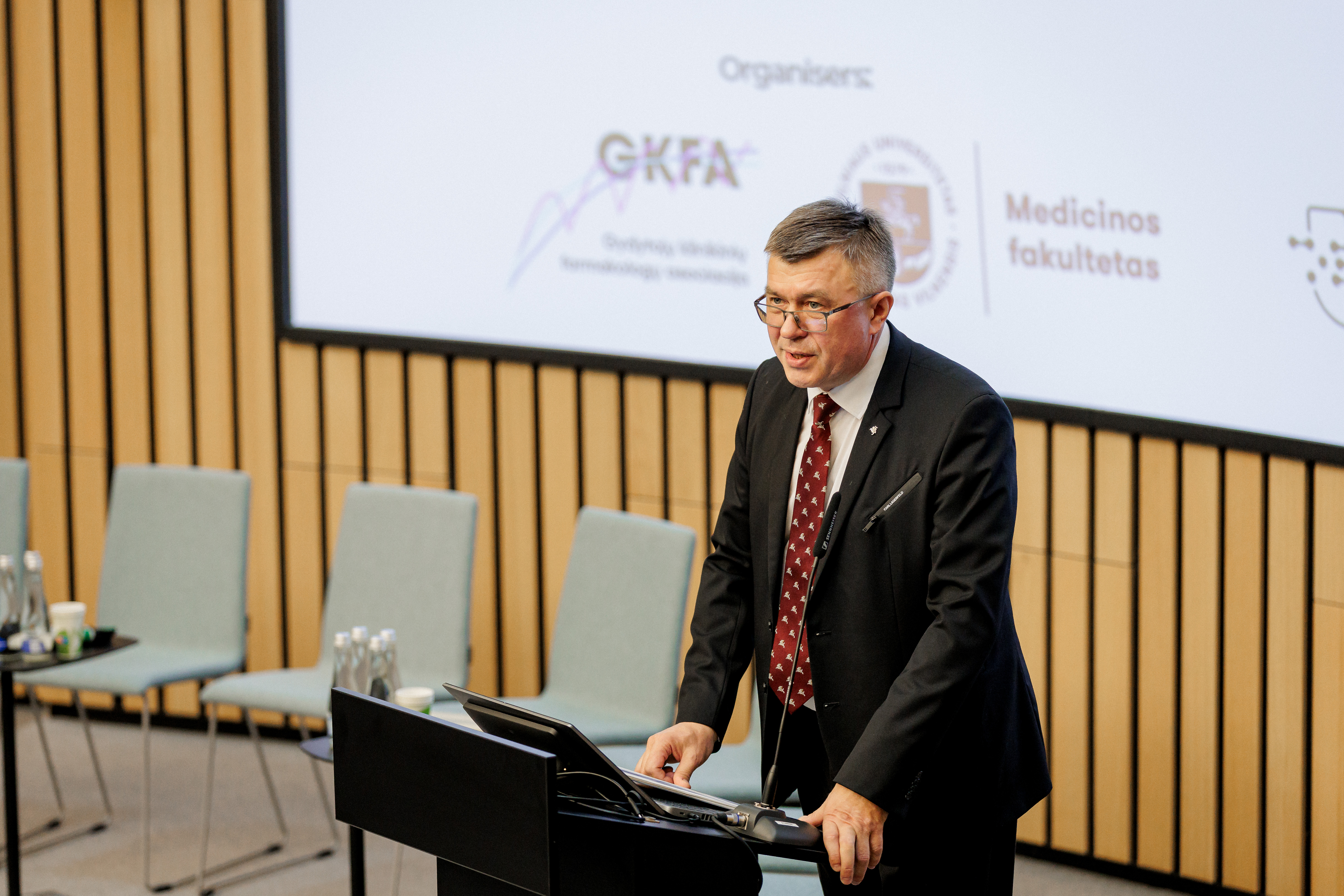 Participants were welcomed by Prof. Dalius Jatužis, Dean of the VU Faculty of Medicine / photo by Andrius Paulavičius
According to Prof. Jatužis, RWD enables the identification of rare adverse effects that no clinical trial has been capable of detecting, helps to understand how treatments affect elderly patients or those with multiple comorbidities, allows for the assessment of the long-term consequences of therapeutic decisions, and makes it possible to determine which interventions are truly beneficial for specific patient groups. This, in turn, enables a transition from population-level evidence towards genuinely personalised medicine.
In his welcoming address, Daniel Naumovas, Vice-Minister of Health of the Republic of Lithuania, stressed that the Baltic States should serve as an example for other countries: “We are small countries, yet this is our advantage, as it allows for easier implementation of change and closer cooperation. Perhaps our greatest strength lies in the highly advanced e-health systems of the Baltic States. The European Union recognises RWD as the most important type of data. It is essential not only for improving public health, but also for driving innovation, as the secondary use of RWD is no less important than its primary use. Without such data, we would not be able to develop new tools and products.”
 Daniel Naumovas, Vice-Minister of Health of the Republic of Lithuania, stressed that the Baltic States should serve as an example for other countries / photo by Andrius Paulavičius
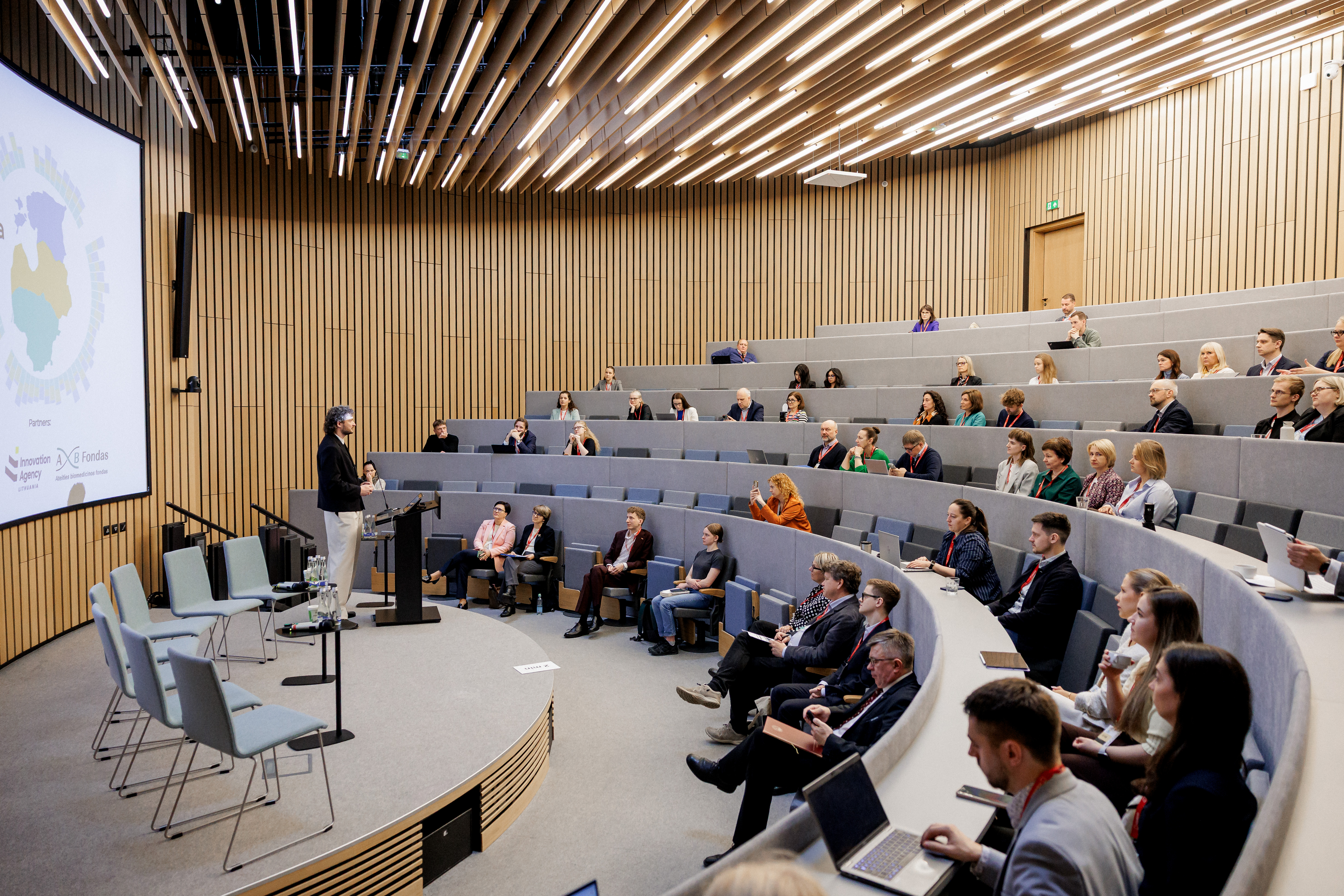
The first day of the conference focused on health data infrastructure in the Baltic States, cross-border data interoperability, and the role of RWD in reimbursement and health technology assessment processes. Discussions also addressed the potential of RWD to improve the rational use of medicines. Speakers presented practical examples of RWD applications, discussed legal and organisational challenges, and highlighted the importance of regional cooperation for more effective data utilisation. Additional topics included rational medicine use, pharmacovigilance, and opportunities to combine Baltic health data for joint research initiatives and evidence-informed health policy decisions.
 Moment of the event / photo by Andrius Paulavičius
The second day of the conference explored methods for analysing RWD and their practical benefits for patients and healthcare systems. Presentations covered pharmacoepidemiological research methodologies, artificial intelligence solutions, the use of RWD to assess health inequalities, and opportunities for implementing innovation in healthcare. During the concluding discussions, experts emphasised that even in the presence of imperfect data infrastructure, practical approaches must be sought to integrate RWD into regulatory, reimbursement, and clinical decision-making processes.
The conference concluded with a call to strengthen strategic cooperation among the Baltic States in the fields of research, innovation, and health policy.
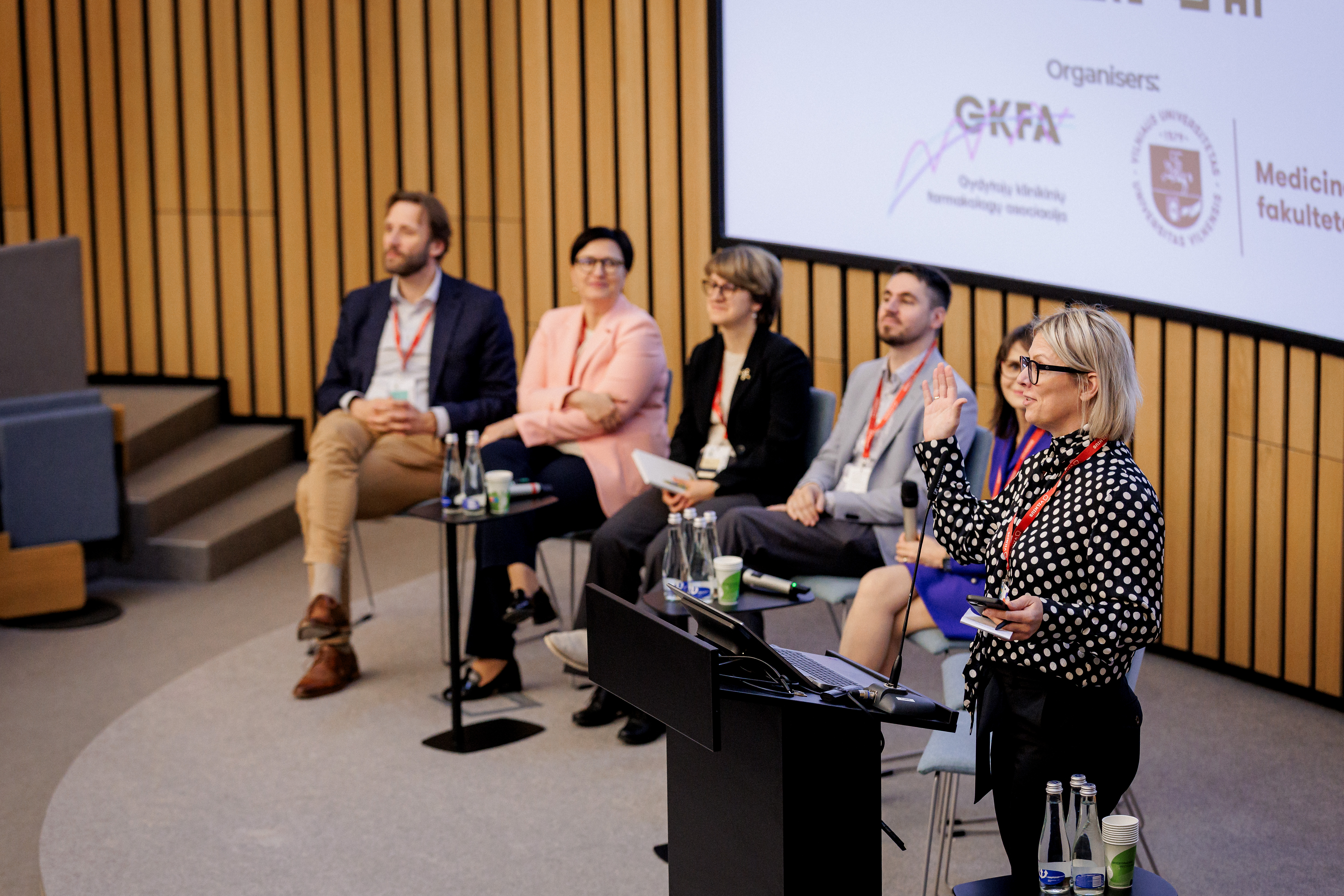
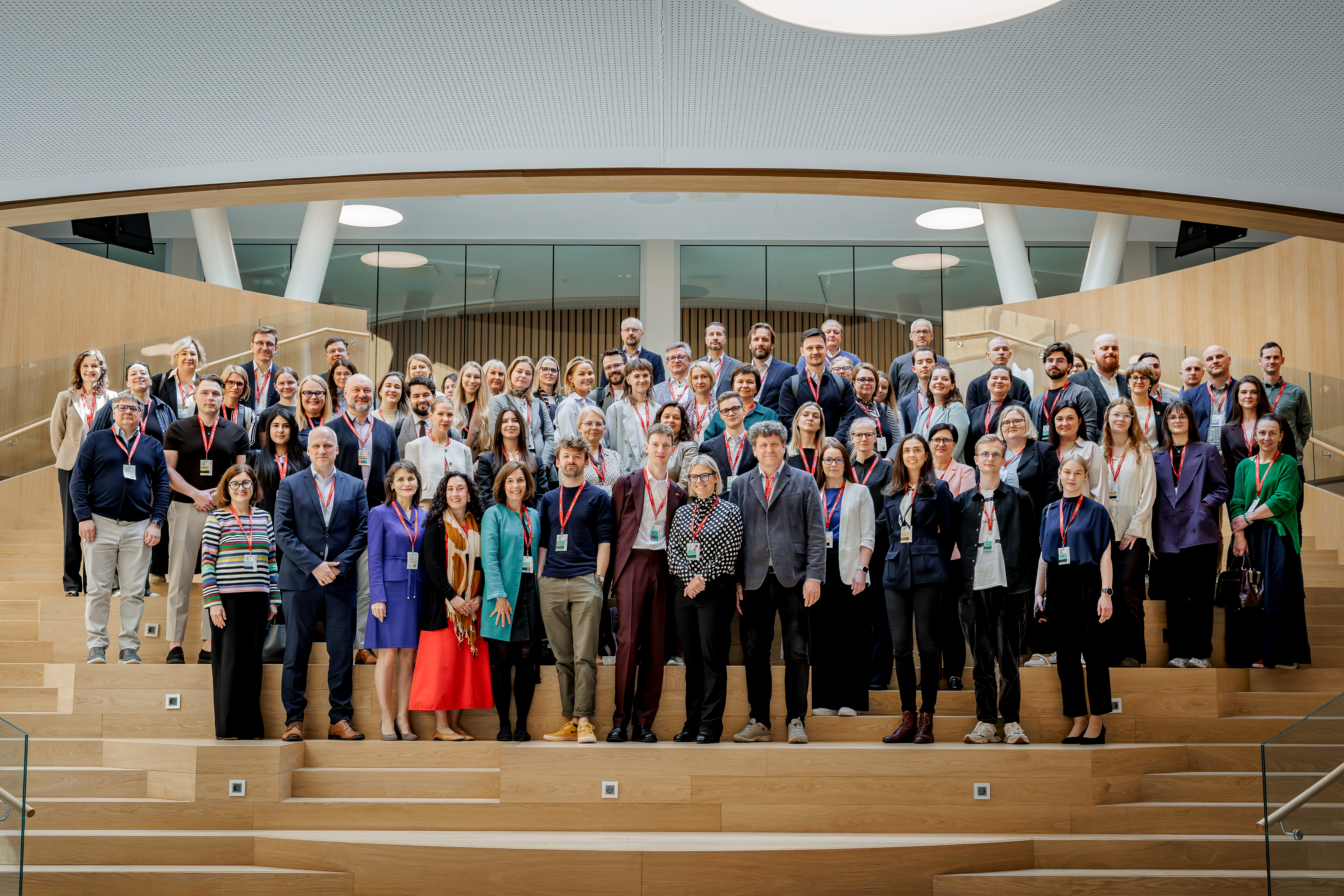 Moment of the event / photo by Andrius Paulavičius
Photo gallery (photos by Andrius Paulavičius):
{gallery}RWD_konferencija_2026{/gallery}