

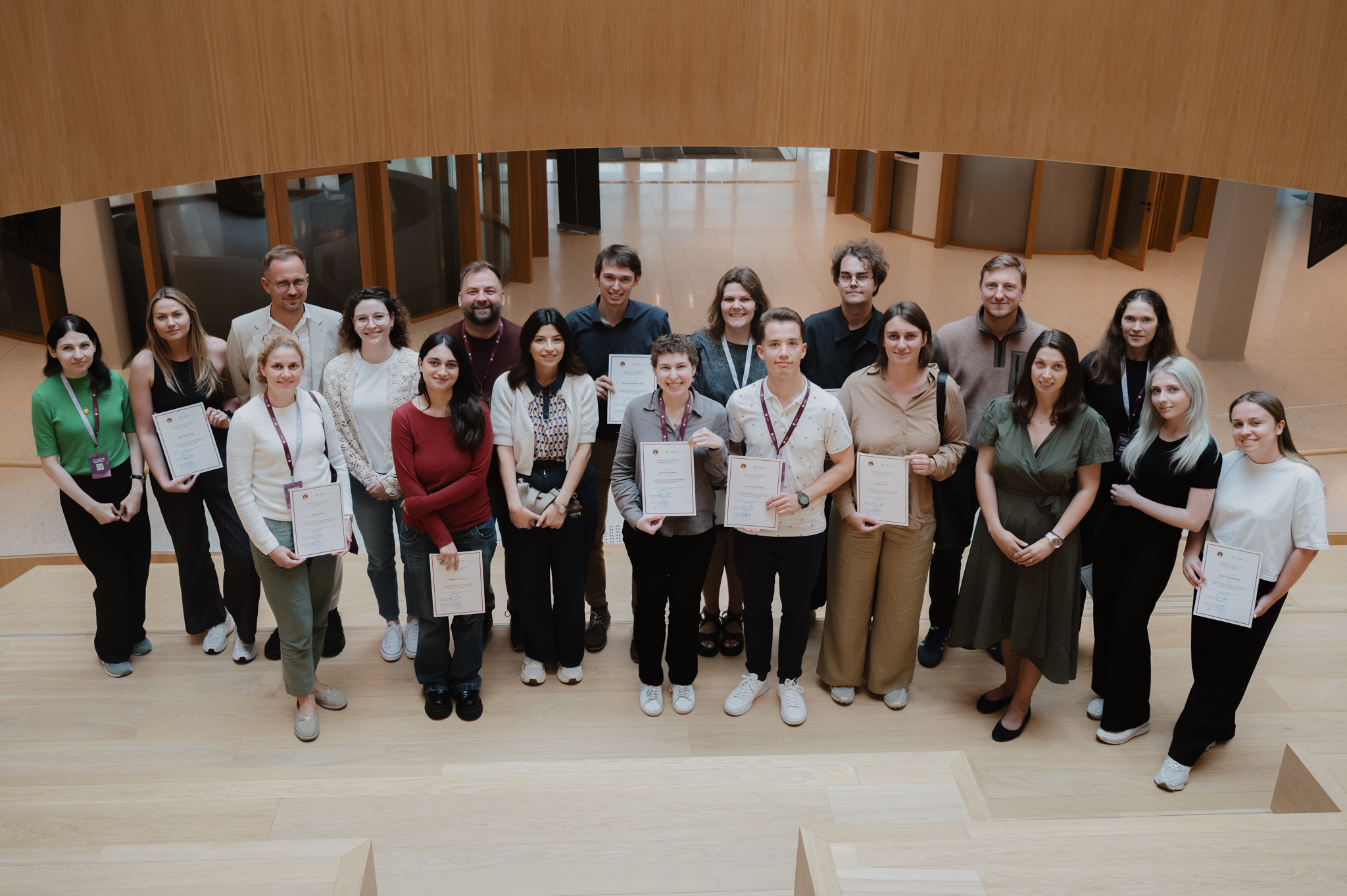
 Participants of the Vilnius International Oncology Summer School (VIOSS) / Photo by J. Stepanova
On July 28–August 1, 2025, the Vilnius International Oncology Summer School (VIOSS) organized by the Vilnius University (VU) Faculty of Medicine (MF) together with the Vilnius University Hospital (VUH) Santaros Clinics National Cancer Centre (NCC) took place in Vilnius. Over thirty doctoral students, interested students and scientists specializing in cancer research from Lithuania, Georgia, Norway, Italy, Latvia, Slovenia and Finland gathered at the VU MF Medical Science Centre.
The VIOSS Summer School brought together future specialists for intensive learning, collaboration and unforgettable cultural experiences. During the event, participants shared their experiences and the latest research data on oncology topics, built professional networks and performed team tasks, solving real „case“ problems. Every day, participants had theoretical knowledge sharing sessions and group work, during which they discussed ideas for doctoral research; they paid visits to the VUH Santaros Clinics, the National Cancer Institute (NCI), the Hematology, Oncology and Transfusion Medicine Centre at the VUH Santaros Clinics, and the National Center of Pathology, and had a cultural program, discovering Vilnius together with like-minded people.
According to one of the initiators of VIOSS, VU MF Vice-Dean of Science and Innovation Assoc. Prof. Dr Karolis Ažukaitis, this international summer school is not only a platform for scientific exchange, but also the beginning of long-term collaborations. „We are glad that the Faculty of Medicine is becoming a space where young researchers from different career stages, institutions, disciplines and countries meet, share knowledge, establish professional contacts and seek solutions to one of the greatest challenges of modern medicine together. I believe that this week will inspire participants for further research and ideas that will contribute to the progress of oncology science and practice on an international scale. The motivation of the event participants to get involved in scientific and innovative activities, especially those that solve problems relevant to patients, left a particular impression. No less impressive were the scientific research ideas prepared and presented during the event, that demonstrated the exceptional abilities of the young generations of researchers. This week shows our huge undiscovered opportunities in the field of science: not only can we attract foreign minds, can be interesting to them, but we also have exceptional people who are motivated to gain knowledge and share it. In short, we opened the door to opportunities and observed how much young people can do and learn in one week. And you can do quite a lot!“ said Assoc. Prof. Dr K. Ažukaitis.
 VU MF Vice-Dean of Science and Innovation Assoc. Prof. Dr Karolis Ažukaitis / Photo by J. Stepanova
The Director of the National Cancer Centre, Assoc. Prof. Dr Valdas Pečeliūnas, presented to the foreign guests the infrastructure of Lithuanian cancer treatment centres and the ambition to establish an internationally recognized Comprehensive Cancer Centre in our country, dedicated to oncology, in which seamless integration of cutting-edge research with clinical patient care would be implemented. He emphasised that this school is one of the missions of oncology professionals: „We want to help young researchers organise their careers and contribute to the development of scientific research in the field of oncology. Often, people who choose medical professions remain in purely clinical activities and do not necessarily continue their scientific careers after the initial stage. Our aim is to encourage people who have chosen the medical profession to make the decision to do so, and representatives of other professions who are interested in oncology issues to get involved in joint work.“
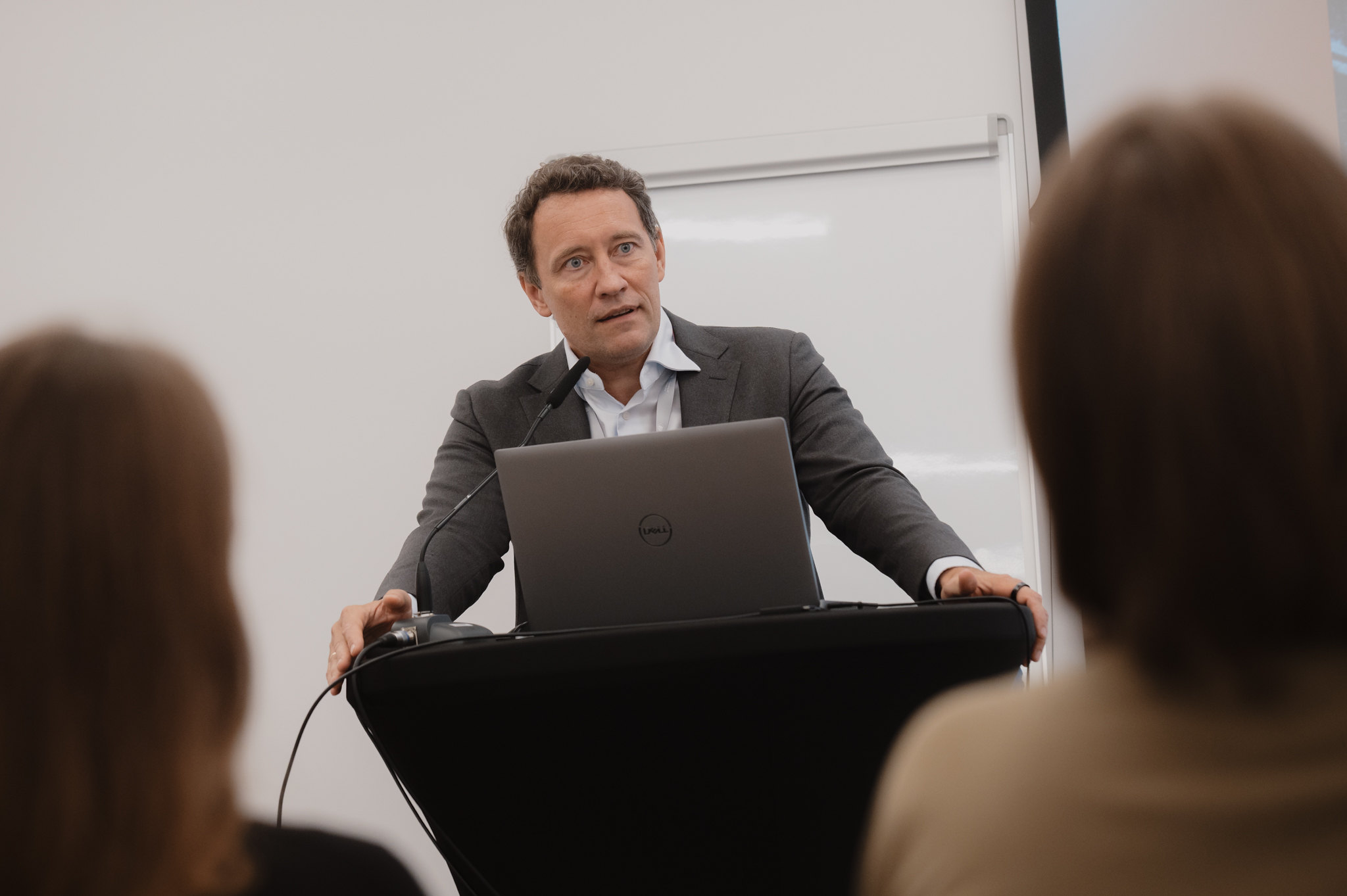 Director of the National Cancer Centre, Assoc. Prof. Dr Valdas Pečeliūnas / Photo by J. Stepanova
The VIOSS participants were welcomed by Marius Čiurlionis, Senior Coordinator of the Palliative Oncology Subdivision of the National Cancer Centre, lecturer at the VU MF, who emphasized the opportunity to make useful acquaintances. „This school is not about the university, nor about the lecturers or scientists, it is all about you. The aim of this summer school is that future doctoral students could establish their contacts wherever you will build your project.“ He wished the participants every success not only in their future activities, but also in making new friends at this summer school.
On the first day of the event, participants listened to presentations by guests from foreign institutions. Prof. Stein Kaasa, Head of the Department of Oncology at the University of Oslo, presented insights into the most important achievements in palliative care and oncology, research gaps and trends in this field. He spoke about the to-be-introduced innovation – a special self-monitoring app for cancer patients, which is supposed to help doctors better understand the patient’s daily life by controlling the symptoms of the disease in the future. The need to pay more attention to the patient’s well-being, values, needs, and change the approach to their care was emphasized. Although it is common to see a patient’s treatment path as a staged straight line, in which steps need to be completed in a certain sequence, he metaphorically compared this process to the London train network: „This path is more like a map of many intersecting possible travel routes: looking at each patient individually, we must be flexible and adaptable to the patient’s needs, because there will be many points on their path where they will have to get off one train and change direction, and travel on another.“ According to him, the patient's constant self-monitoring and daily recording of pain and sensations in the app could improve communication between the doctor and the patient and lead to targeted treatment adaptation and response to necessary changes in the course of treatment.
Professor Maria Grazia De Marinis from the Campus Bio Medico University of Rome also dedicated her presentation to the topic of palliative care for patients. She emphasized the need to change the attitude towards a dying person regardless of their condition and to raise the importance of research in this area. According to her, relatives, caregivers and doctors are involved in this patient's journey, so the involvement and understanding of all of them is very important. „We need to look at the sick person holistically, integrate their unique experience of suffering, provide support for families and generally deepen human relationships. In palliative care, it is very important to adapt to the trajectories of illness and cooperate.“ Prof. M. Grazia De Marinis presented the latest statistics, emphasizing that although almost 57 million people in the world need palliative care every year, only about 14% of them actually receive quality help on time. Drawing on the ideas of Cicely Saunders, the pioneer of the hospice idea, she noted that doctors and scientists must learn from their patients and their unique stories.
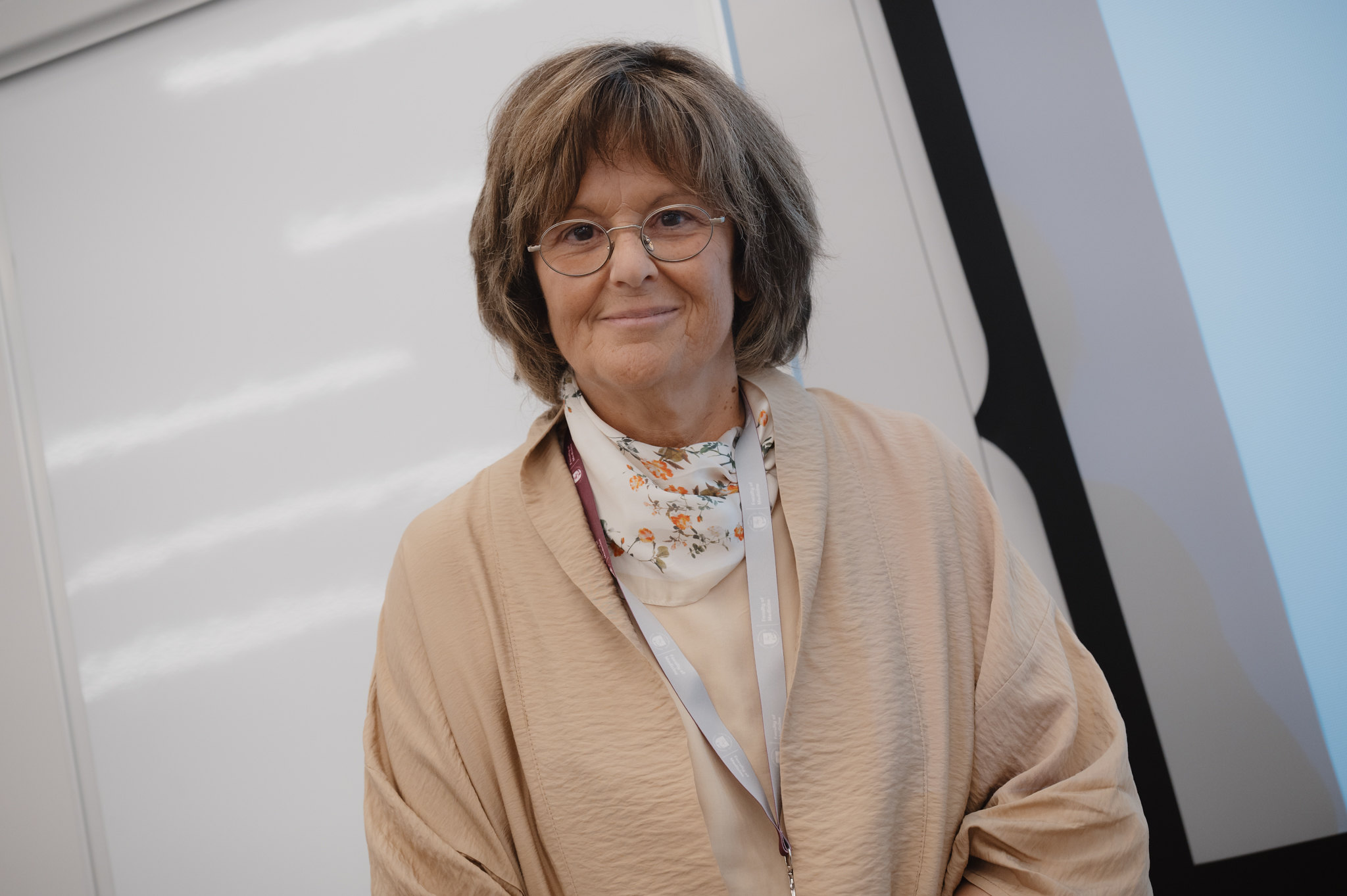 Prof. Maria Grazia De Marinis from the Campus Bio Medico University of Rome / Photo by J. Stepanova
During the VIOSS summer school, participants also heard lectures by paediatric nephrologist Assoc. Prof. Dr Karolis Ažukaitis (VU MF), geneticist Prof. Sonata Jarmalaitė (VU Life Sciences Center), physician Richard Cervin (Medicine General), Dr Giorgia Petrucci (Campus Bio Medico University of Rome), virologist Dr Gytis Dudas (VU Life Sciences Centre, hematologist Dr Skirmantė Černiauskienė (VU, VUH Santaros Clinics), hematologist Dr Adomas Bukauskas (VUH Santaros Clinics), hematologist Assoc. Prof. Dr Andrius Žučenko (VUH Santaros Clinics), urologist (oncologist) Dr Aušvydas Patašius (NCC), pathologist Prof. Dr Arvydas Laurinavičius (VU, National Center of Pathology), cancer biology scientist Prof. Jukka Westermarck (University of Turku) and paediatric oncohematologist Prof. Dr Jelena Rascon ( VUH Santaros Clinics, Pediatric Oncohematology Centre).
M. Čiurlionis, who moderated the event, emphasized that the VIOSS school started off really successfully by connecting doctoral students from various countries. „This year is the first time, but we want the school to grow and develop. We have seen great interest in it from both Lithuanian and foreign students, but the number of places was limited. Maybe next year we will have two groups of students, because the success of the first year is obvious – students’ hands were raised during the first lectures, the audience had many questions, so I think this event has the potential to become traditional,“ he said. According to him, during the sessions, lecturers, experts in the field of oncology from European countries and Lithuania, spoke to future specialists on all possible topics. This helps them orient themselves and understand where they can focus their scientific activities, what are the specifics and opportunities of individual fields. Practical advice was shared on how to implement scientific research, what to pay attention to, and how to use innovative technologies and AI in conducting scientific research.
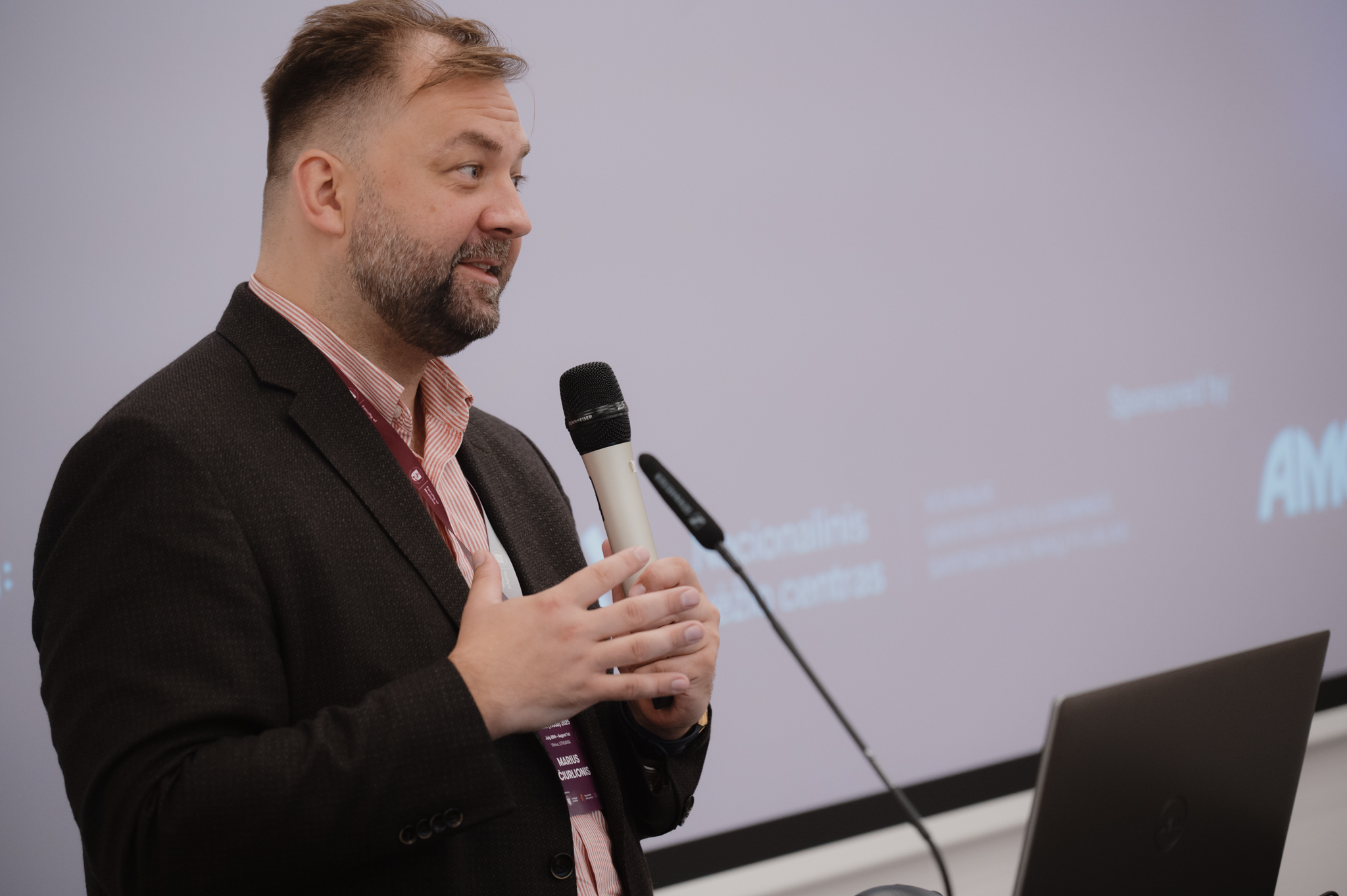 Marius Čiurlionis, Senior Coordinator of the Palliative Oncology Subdivision of the National Cancer Centre / Photo by J. Stepanova
VIOSS participant Kasandra Musovic from the University of Maribor in Slovenia shared that she and other visiting colleagues were very impressed by the well-organized event and the brand new laboratories. According to her, this summer school became a very good starting point for everyone: „It was a great opportunity for researchers, doctors of different specialties and nurses to combine their capabilities. After listening to lecturers from various European countries, we discovered opportunities to participate in various European projects and share our existing experiences.“
Throughout the week, the scientific work and presentations by doctoral students were evaluated taking into account their innovation, potential to apply the results in treatment practice, and the ability of the scientist to clearly construct the research idea and strategy. During the closing ceremony of the event, the team of authors of the best scientific project was awarded: Ugnė Mickevičiūtė (Vilnius University), Mariam Vashakidze (David Tvildiani Medical University), Adomas Danilevičius (Lithuanian University of Health Sciences) and Mindaugas Smetaninas (Vilnius University).
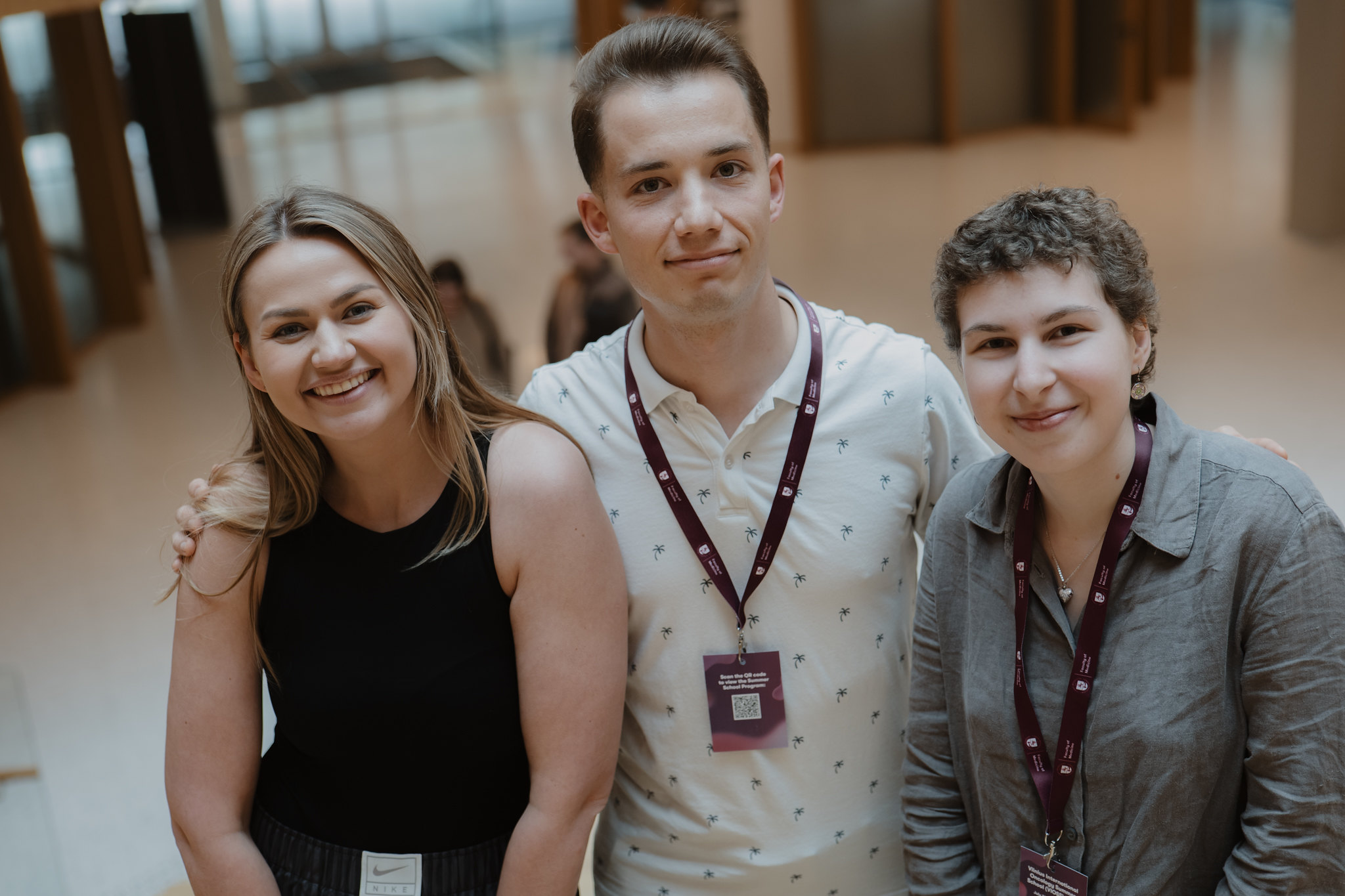 The team of authors of the best VIOSS scientific project was awarded / Photo by J. Stepanova
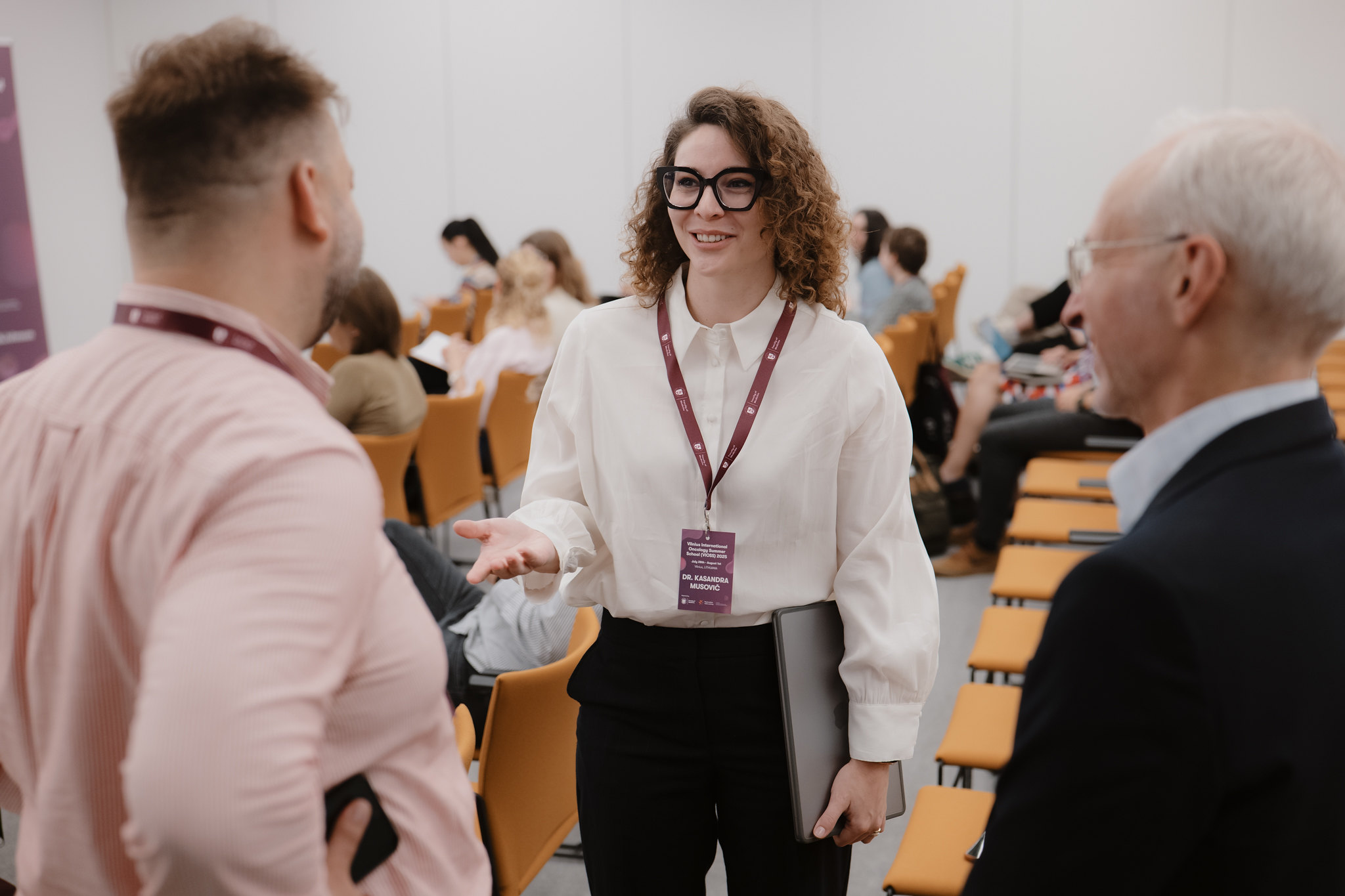 Moment of the event / Photo by J. Stepanova
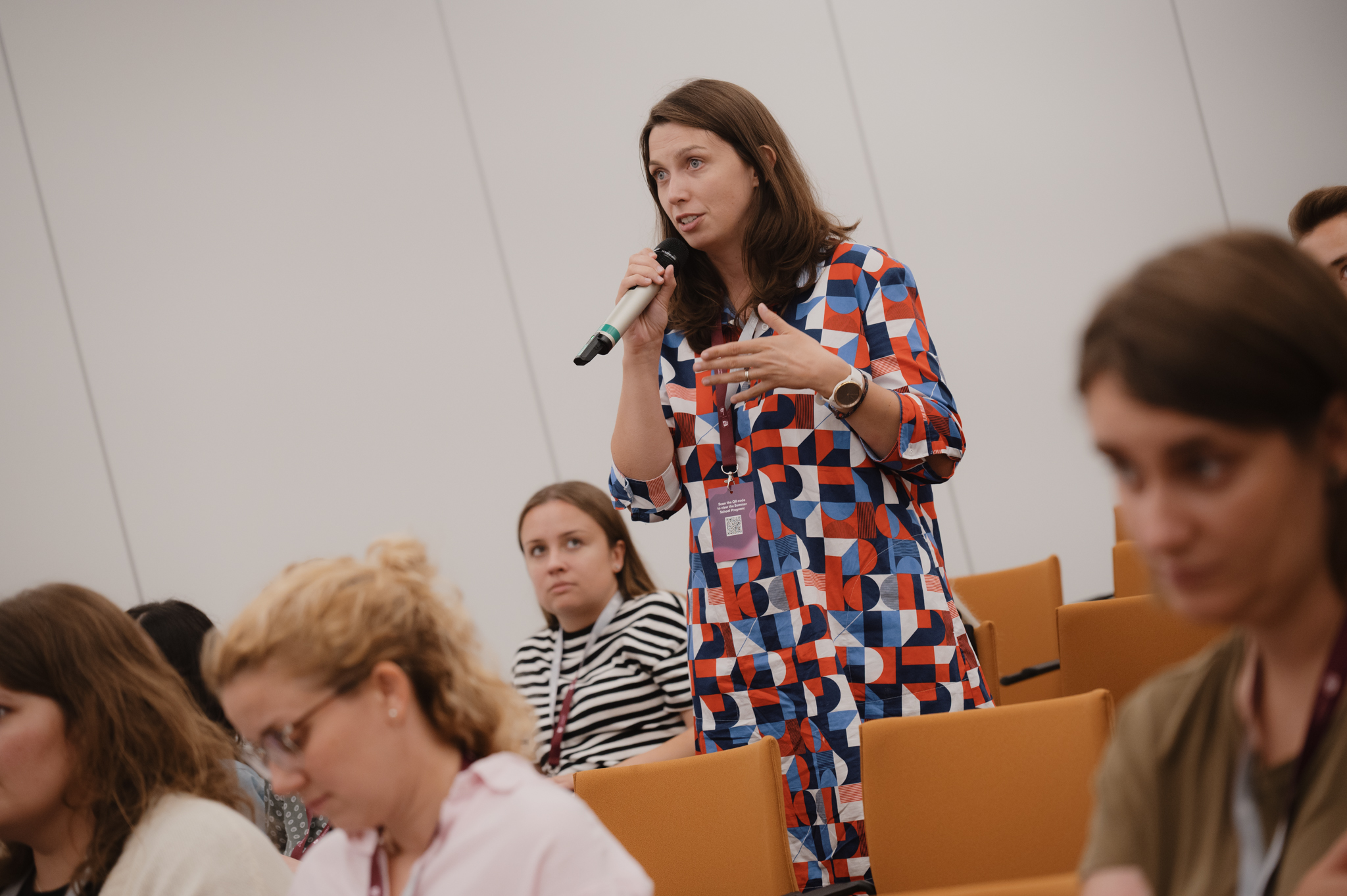 Moment of the event / Photo by J. Stepanova
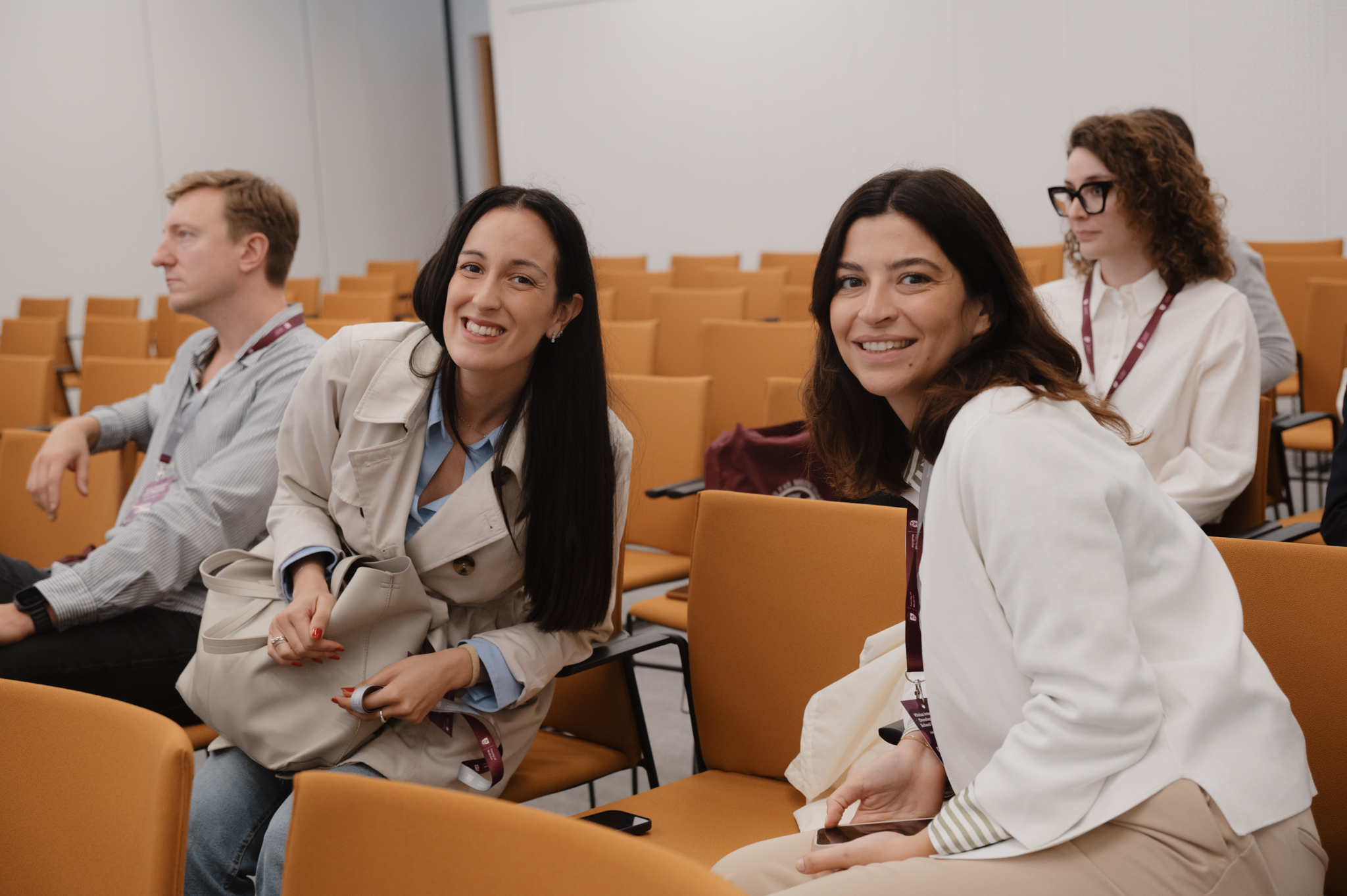 Moment of the event / Photo by J. Stepanova
Full gallery of photos here.