

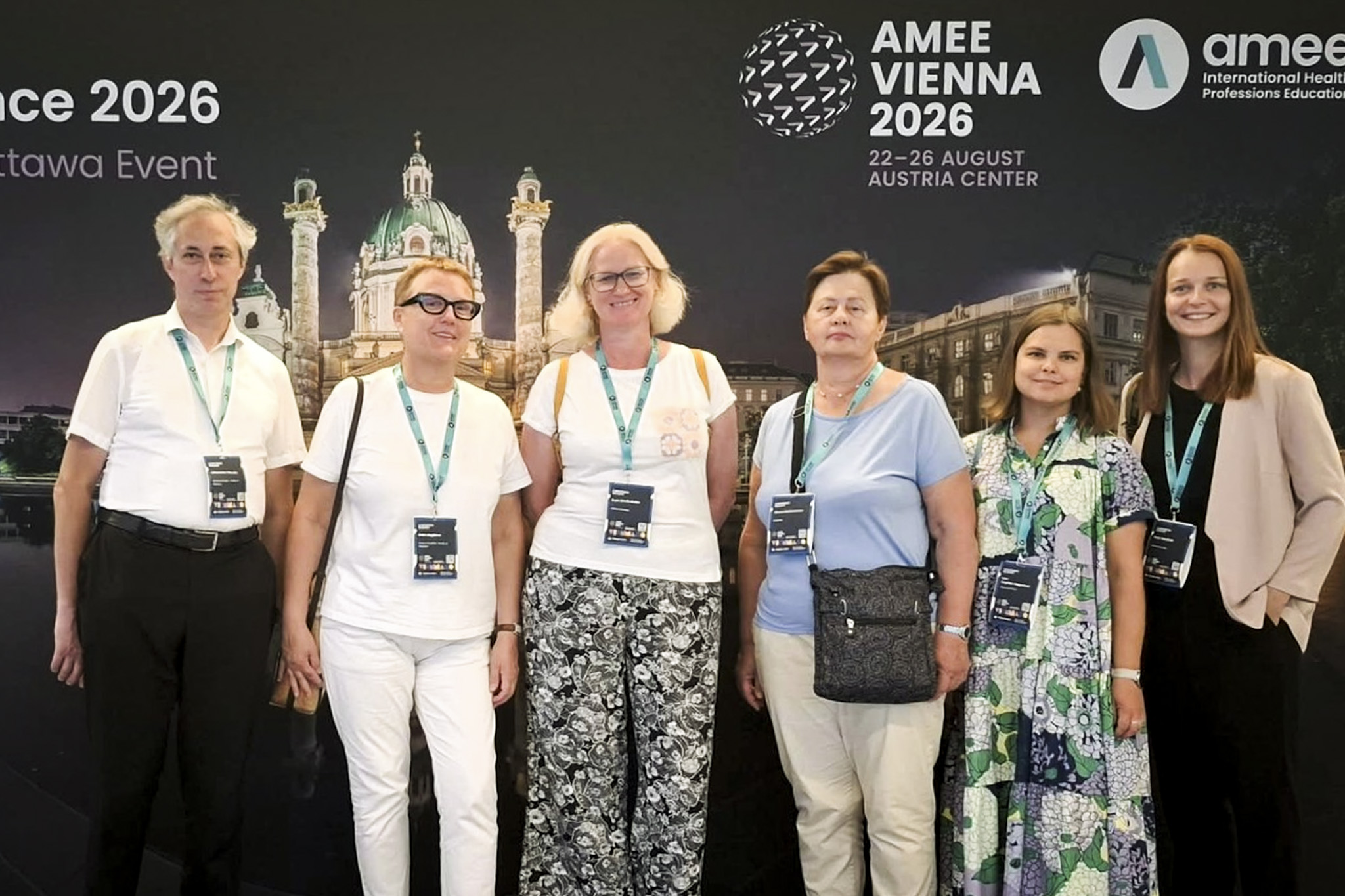
 The delegation from the Faculty of Medicine of Vilnius University (from left): Assoc. Prof. Dr Aleksandras Vilionskis, Indrė Dagilienė, Assoc. Prof. Dr Rūta Bendinskaitė, Assist. Prof. Dr Aldona Mikaliūkštienė, Assist. Prof. Dr Indrė Čergelytė-Podgrušienė, and Assoc. Prof. Dr Rūta Vosyliūtė / Photo from personal archive
One of the most significant conferences in health professions education, AMEE 2026 (The International Association for Health Professions Education), was held at the modern Austria Center Vienna conference centre in Vienna, Austria, with a delegation from Vilnius University (VU) Faculty of Medicine also taking part. This year’s conference theme, “Educators as Catalysts: Building the Future of Health”, highlighted the role of educators, education leaders and the academic community in shaping the future of health professions education and, consequently, the future of healthcare as a whole. The event brought together more than 4,000 health professions education professionals from countries around the world.
The event was attended by a delegation from the VU Faculty of Medicine – Assoc. Prof. Dr Rūta Vosyliūtė, Head of the Educational Competencies Division, education project coordinator Indrė Dagilienė, Assoc. Prof. Dr Aleksandras Vilionskis, representing the Clinic of Neurology and Neurosurgery, Institute of Clinical Medicine, Assoc. Prof. Dr Rūta Bendinskaitė, representing the Institute of Odontology, as well as Assist. Prof. Dr Indrė Čergelytė-Podgrušienė and Assist. Prof. Dr Aldona Mikaliūkštienė, representing the Department of Midwifery and Nursing, Institute of Health Sciences. Participation in the AMEE conference provided them with an opportunity to gain first-hand insight into the latest trends in medical and other health professions education, discuss the challenges of contemporary teaching, share experience with the international academic community and bring back new ideas that can be applied to the study process and educational activities at the Faculty of Medicine.
A Space for Sharing the Latest Ideas in Education
The AMEE conference is an important annual forum where educators, doctors, researchers, students, study programme developers and leaders of academic institutions come together. The programme combines plenary sessions, practical workshops, discussions, research presentations and networking activities. This structure enables participants not only to learn about the latest research in health professions education, but also to discuss practical ways of applying it in different institutions and countries.
This year’s programme was particularly broad. Considerable attention was devoted to the application of artificial intelligence and technology-based learning, curriculum design, the development of educators’ competencies, student assessment, interprofessional learning, inclusion and equal opportunities, sustainability, global health, student support and the development of educational research. Separate conference streams focused on continuing professional development, improving teaching and learning processes, patient safety and collaboration between different health professions in education.
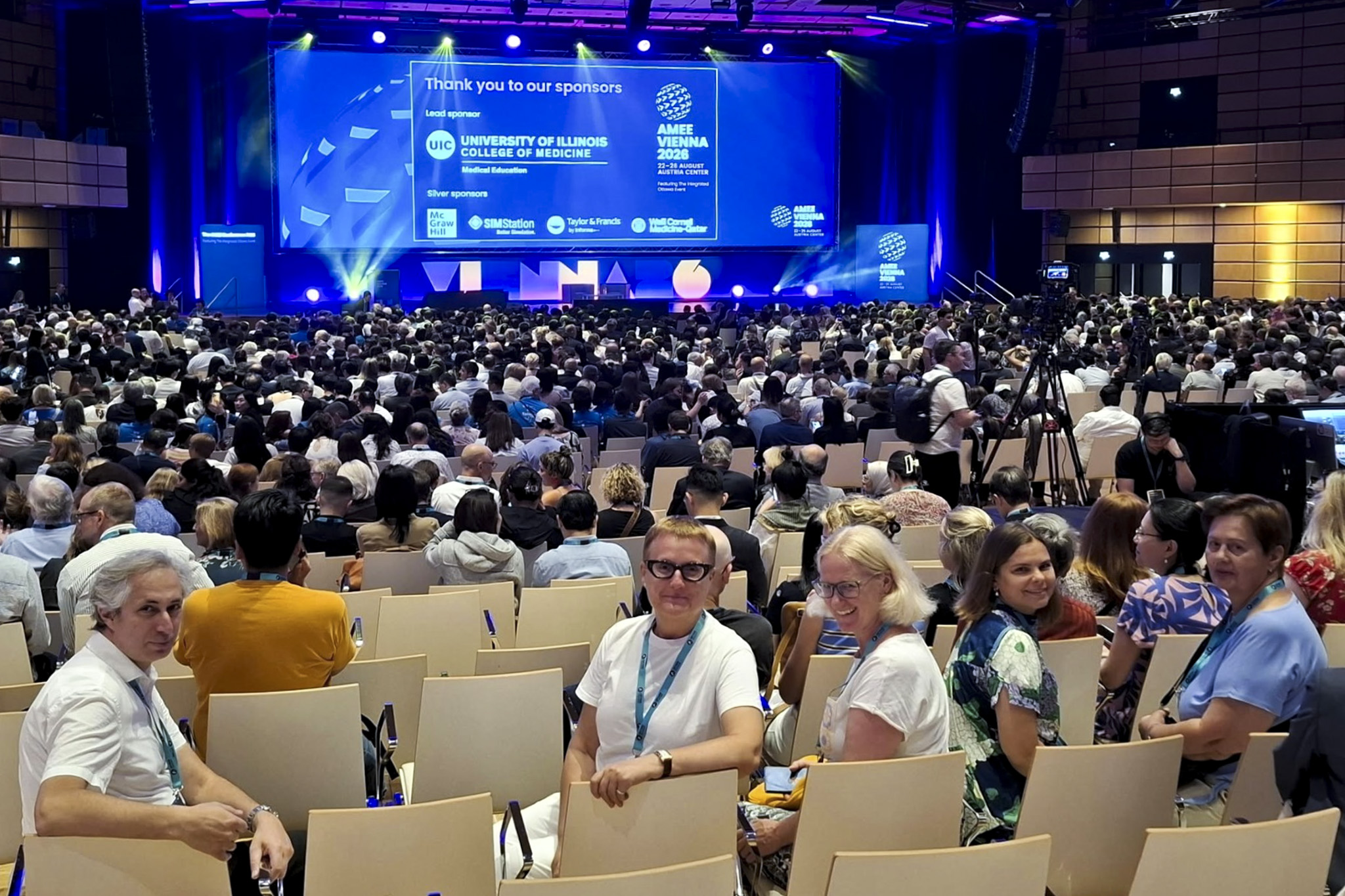 Delegation from the Faculty of Medicine of Vilnius University, a moment from the event / Photo from personal archive
One of the particularly prominent themes of the conference was the role of artificial intelligence in health professions education. Practical workshops and discussions examined not only how students and educators can use artificial intelligence tools for learning, teaching and research, but also the responsible, ethical and transparent use of such tools. Considerable attention was also given to preparing students to work in a healthcare environment undergoing rapid technological change.
From Assessing Professional Competencies to Patient Safety
An important part of AMEE 2026 was the co-hosted Integrated Ottawa Event, themed “Authentic Assessment to Improve Healthcare and Learning Outcomes”. This part of the programme focused primarily on the assessment of student and resident competencies: developing assessment systems, selecting appropriate methods, designing tests, interpreting results, conducting psychometric analysis and considering how assessment can genuinely contribute to the quality of learning and improved healthcare outcomes.
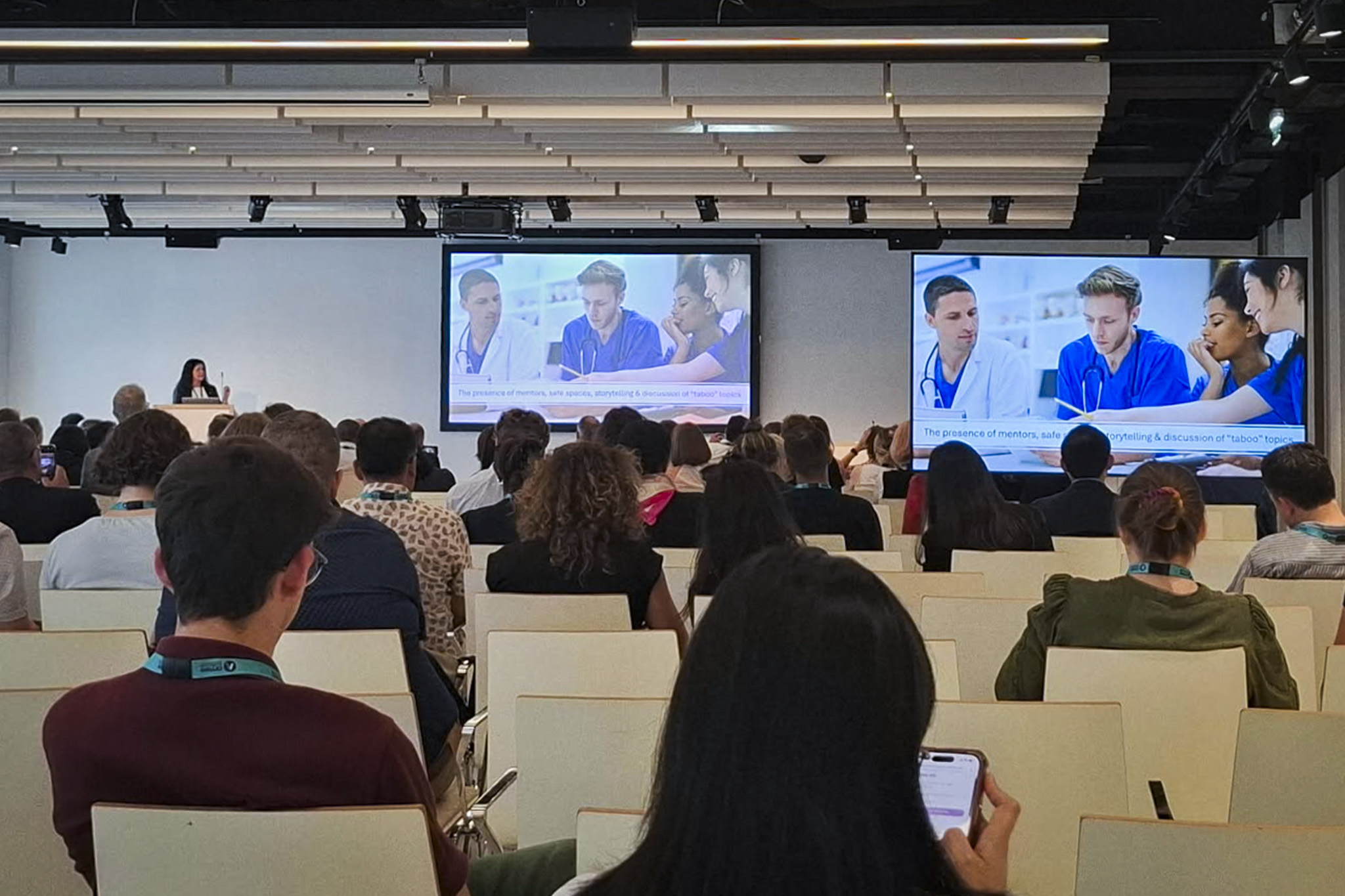 Moment from the event / Photo from personal archive
The conference also featured extensive discussion of competency-based education, the clinical learning environment, teamwork and interprofessional skills, simulation-based education and patient safety. One of the more prominent directions was the aim to view education not as a separate university activity, but as an integral part of the quality of future healthcare. This means that study programmes, student assessment methods and educators’ competencies must be developed with consideration not only for academic outcomes, but also for the skills that future healthcare professionals will need in a real clinical environment.
Greater Focus on Inclusion and the Future of Education
No less important were the themes related to diversity, equality and inclusion. Conference participants explored how to create a study environment in which students with different needs and experiences can fully participate in the learning process. Practical topics also included preparing future healthcare professionals to work appropriately with patients with disabilities and developing more inclusive study programmes.
AMEE 2026 also encouraged a broader approach to health professions education – moving from the traditional transfer of knowledge towards active, student-centred teaching based on teamwork, reflection and evidence. The conference programme explored approaches based on futures thinking, systems thinking and design thinking, enabling academic institutions to better prepare for change and develop more flexible and sustainable study programmes.
New Ideas and Examples of Good Practice to Take Back
For the VU Faculty of Medicine delegation, participation in AMEE 2026 was an important opportunity not only to learn about international trends in health professions education, but also to assess them in the context of their own institution. The ideas presented at the conference are relevant to the improvement of study programmes, student assessment, the development of educators’ competencies and the integration of new technologies into studies.
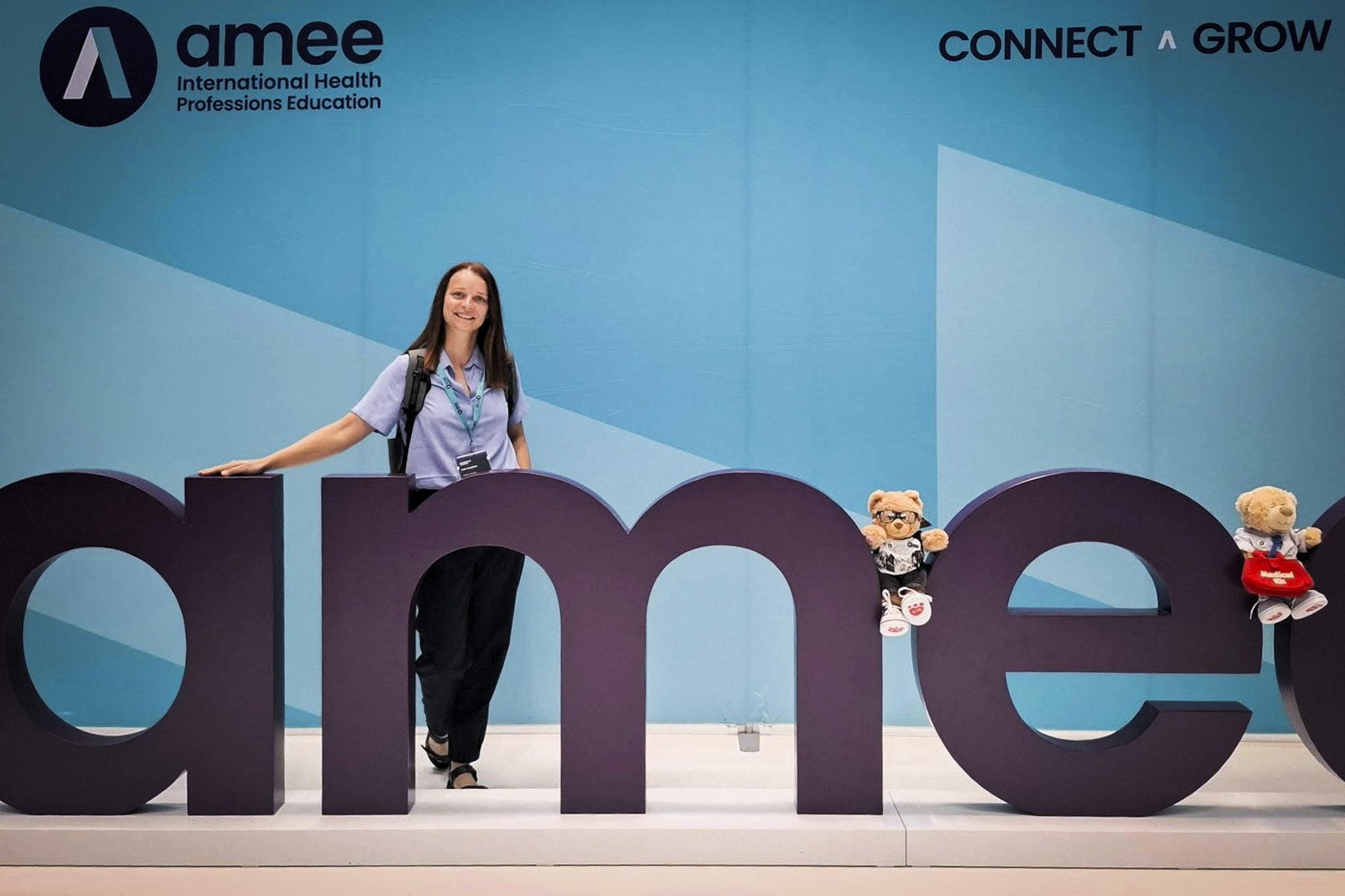 Assoc. Prof. Dr R. Vosyliūtė/ Photo from personal archive
According to Assoc. Prof. Dr R. Vosyliūtė, who attended the conference, AMEE 2026 once again demonstrated that health professions education is changing particularly rapidly today. “Artificial intelligence, competency-based education, new assessment strategies, interprofessional learning and increasing attention to the quality of the learning environment require the continuous development of educators and institutions. International conferences such as AMEE provide an opportunity not only to observe these changes, but also to actively engage with them, bringing new ideas and examples of good practice back to our academic community,” she said.
The international dimension of the conference was no less significant. AMEE provides an opportunity to establish new academic connections, discuss potential joint educational and research initiatives, and compare the experiences of different universities. Such professional contacts are particularly important in ensuring that studies at the VU Faculty of Medicine are developed in line with international trends while also retaining their strong academic traditions. “Each year, the Faculty seeks to send several representatives from different disciplines – medicine, dentistry, public health and nursing – to this conference, providing an opportunity for those who have been selected as the best educators, Study Programme Committee chairs and other active educators to attend,” notes Assoc. Prof. Dr R. Vosyliūtė.