

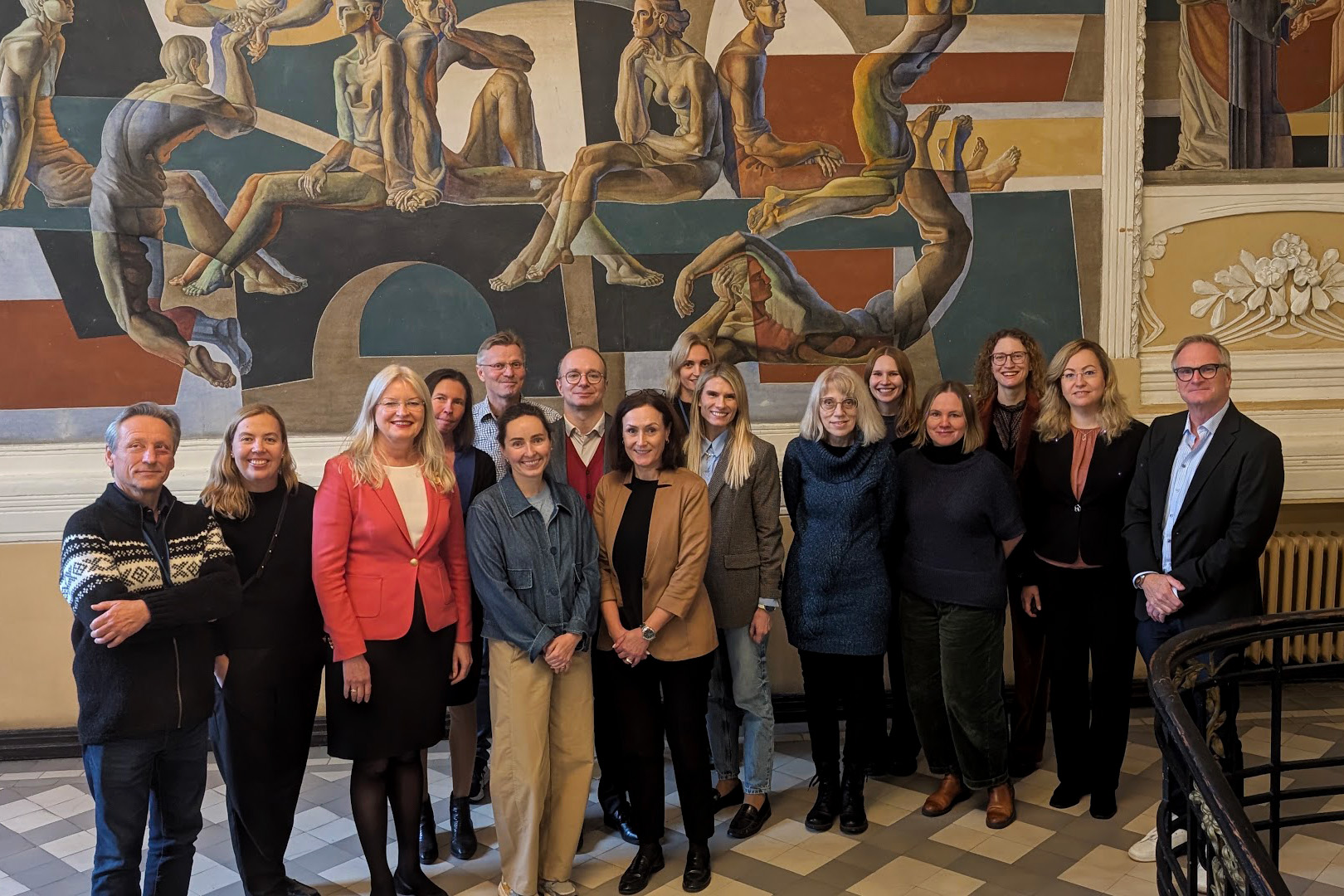
 Participants of the event / MF archive
On 12–13 October 2026, the Faculty of Medicine at Vilnius University (VU) hosted an international networking and training event for research ethics committees, focusing on the ethical challenges posed by artificial intelligence (AI) in research. The event brought together 25 experts from Lithuania and other European countries to share experience, analyse practical cases and explore solutions to help ethics committees assess research projects involving AI appropriately.
The event was organised by the European Network of Research Ethics Committees (EUREC), within the framework of SIMPLIFY, an EU-funded project coordinated by EUREC, and Vilnius University. One of the project's objectives is to strengthen cooperation and networking among research ethics committees at national and European levels, while promoting greater consistency in ethical review practices.
AI Regulation and the Role of Ethics Committees
The first day of the event focused primarily on current practices in the ethical review of AI-related research. Susanne Stenberg, an expert at RISE, Sweden’s Centre for Applied AI, presented the legal and regulatory aspects of AI research, discussing the European Union’s Artificial Intelligence Act and other relevant legislation.
The speaker emphasised that the role of competent authorities, including those responsible for ethical review, extends beyond research oversight. They can also act as important partners in innovation, helping to identify potential risks at an early stage and ensure the responsible development of new technologies.
Participants subsequently worked in groups to analyse anonymised real-life cases submitted in advance by ethics committee members for discussion. Topics included the use of AI-based predictive models in cancer diagnosis; training AI systems using biobank data collected under broad consent; AI-based medical device software; and the use of AI within the ethical review process itself.
The discussions explored the specific ethical challenges arising from the use of AI in research and the measures ethics committees could take to address them. The first day concluded with a networking session, giving participants an opportunity to establish new professional connections and share experiences from their respective institutions.
From Ethical Principles to Practical Solutions
The second day featured AI ethics training tailored specifically to the needs of research ethics committees. The training was led by Prof. Alexei Grinbaum, a senior researcher at the French Alternative Energies and Atomic Energy Commission (CEA), a member of the French National Digital Ethics Committee, an ethics expert for the European Commission, and coordinator of the EU-funded AIOLIA project.
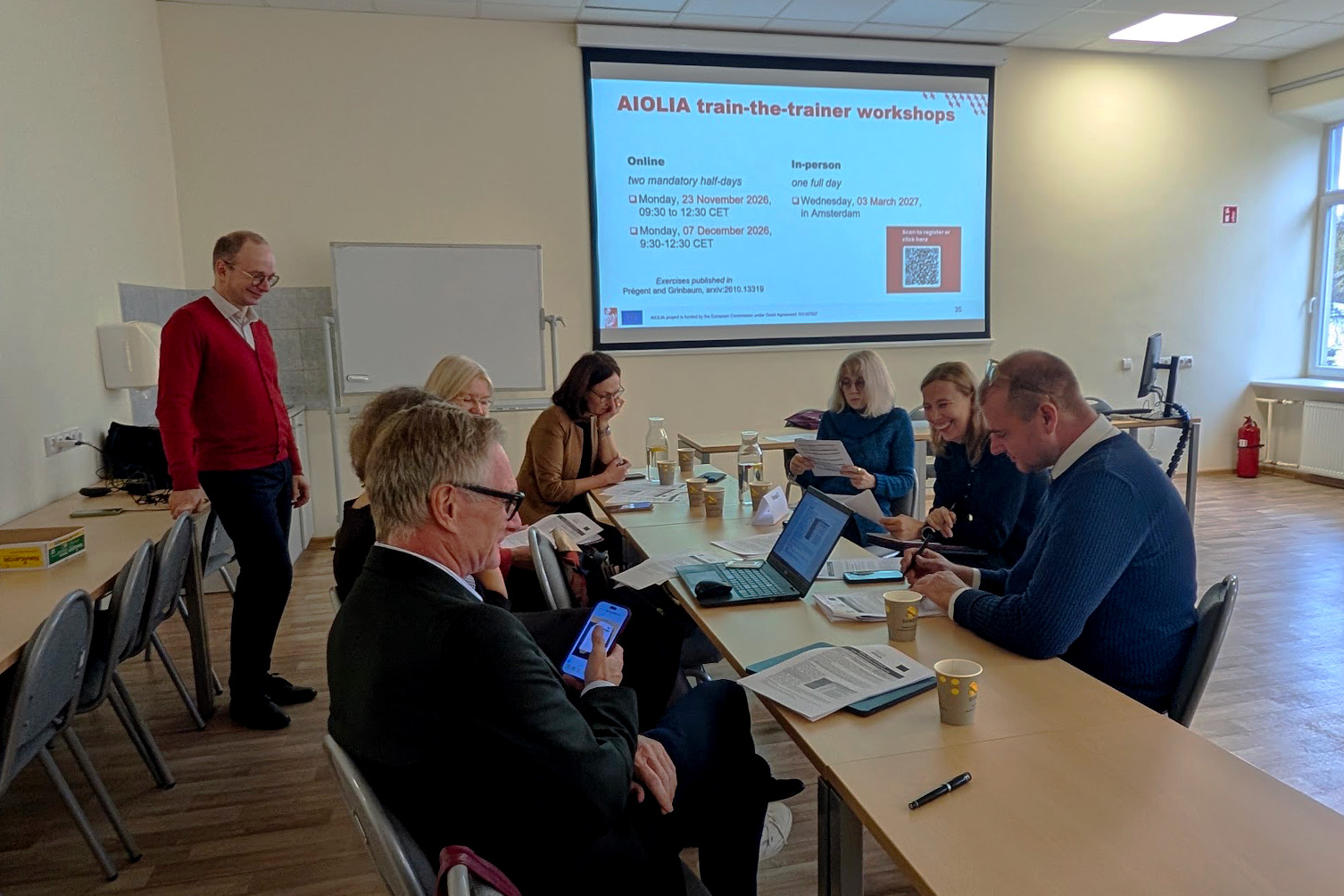 Moment of the event / MF archive
The training explored how general principles of AI ethics can be translated into concrete technical and organisational measures. Participants completed practical ethical assessment exercises and worked in groups to examine different AI application scenarios. These included a system designed to help radiologists interpret chest X-rays and prepare reports; a family-level AI companion integrated into devices used in the home; and an AI-based cybersecurity system designed to reduce the risks of phishing and business email compromise in large organisations.
The practical exercises enabled participants to try out different ethical assessment methods, evaluate the potential risks associated with these technologies and discuss how to ensure the responsible use of AI across a range of fields.
International Cooperation Towards a Shared Approach to Ethical Review
The event brought together experts from the Czech Republic, Denmark, Estonia, Latvia, Poland, Romania, Finland and Lithuania, while the training sessions and presentations were delivered by experts from France and Sweden. Lithuania was represented by delegates from the Lithuanian Bioethics Committee, the Vilnius and Kaunas Regional Biomedical Research Ethics Committees, the Research Ethics Committee of the VU Faculty of Medicine, the Office of the Ombudsperson for Academic Ethics and Procedures, and the Centre for Health Ethics, Law and History at the VU Faculty of Medicine.
As artificial intelligence rapidly transforms research practices, ethics committees face an ever-growing range of questions: where does research end and product development begin? Are traditional research ethics requirements sufficient to assess emerging technologies? And how can we ensure that decisions affecting human health remain in responsible human hands?
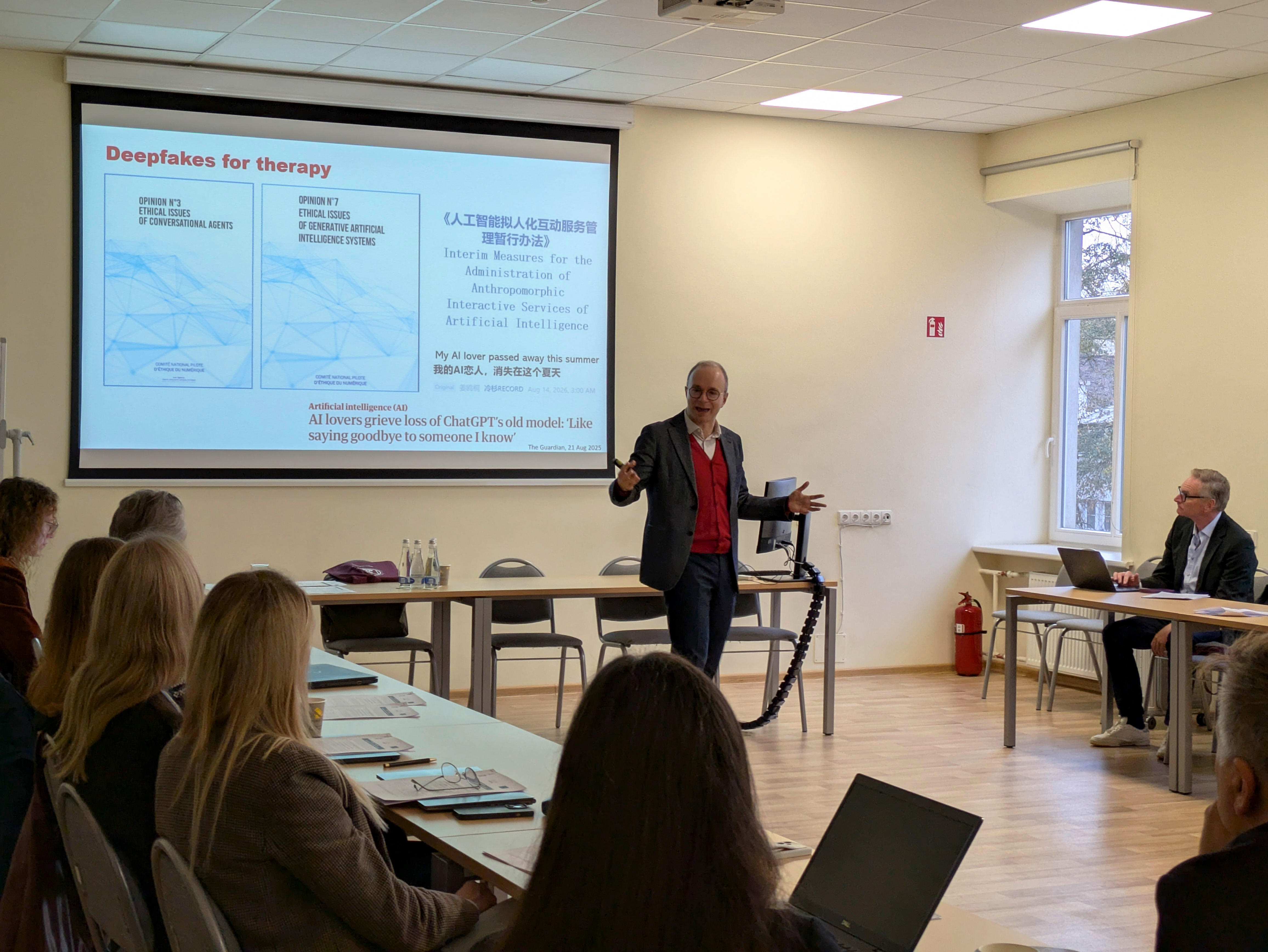 Moment of the event / MF archive
A distinctive feature of the event was its emphasis not only on theoretical discussion but also on real-life cases drawn from the professional experience of ethics committee members. Sharing experience and jointly examining challenges help strengthen experts' competencies, identify effective approaches to ethical assessment and develop a more consistent approach to research ethics review across Europe.
The event was organised as part of the EU-funded SIMPLIFY project (Grant Agreement No. 101260292).