

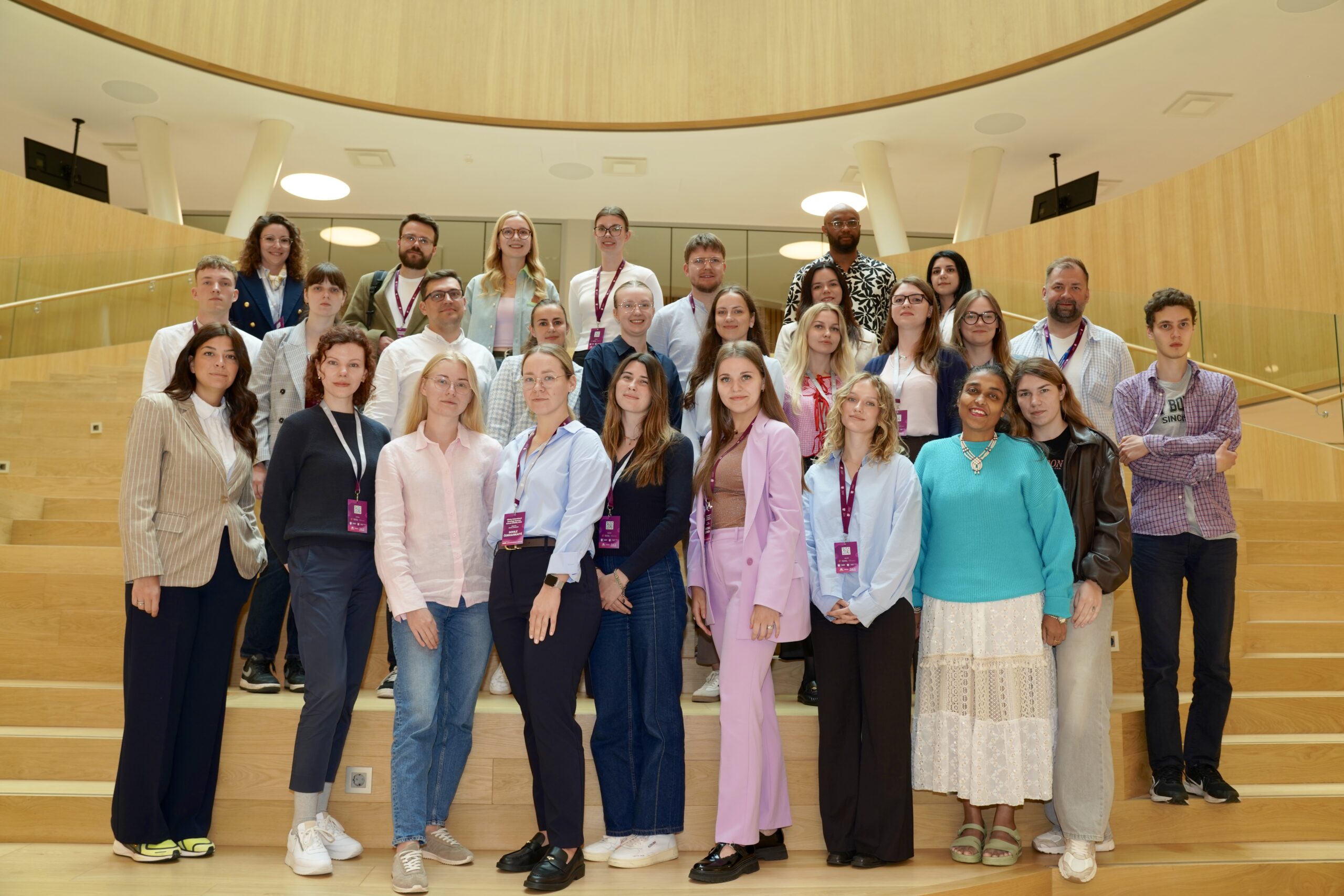
 Participants of the Vilnius International Oncology Summer School / Photo by Marija Urtė Marčiulionytė
On 6–10 July 2026, the Vilnius International Oncology Summer School (VIOSS 2026) took place in Vilnius. Organised for the second year in a row, the event, aimed at young oncology talents, attracted 25 participants from 9 countries. During five intensive days, the summer school brought students and young researchers together for a shared week of science, clinical practice, innovation, and international cooperation.
Like last year, VIOSS 2026 was organised by Vilnius University (VU) Faculty of Medicine (FM) together with the National Cancer Center (NCC), in cooperation with the VU Life Sciences Center (LSC), the Children’s Hospital of Vilnius University Hospital Santaros Klinikos, the National Cancer Institute, and a large group of Lithuanian and foreign experts. The success of the event was determined by the close cooperation of various institutions, while the Vice-Dean for Research and Innovation at VU FM, paediatric nephrologist, Assoc. Prof. Dr Karolis Ažukaitis, an expert in oncogenetics and professor at the Institute of Biosciences at the VU Life Sciences Center, Dr Sonata Jarmalaitė, the director of National Cancer Center, Assoc. Prof. Dr Valdas Pečeliūnas, Assoc. Prof. Dr Goda Elizabeta Vaitkevičienė from VU FM Clinic of Children’s Diseases, and VU FM lecturer at the Department of Midwifery and Nursing, including the Chief Coordinator of Palliative Oncology Subdivision at NCC, Marius Čiurlionis, and the entire steering team, paid particular attention to the preparation and implementation of the programme.
This year, the event’s content was oriented to the whole spectrum of modern oncology knowledge, starting with the fundamental research in laboratories, to the most sophisticated clinical solutions, personalised medicine, palliative care, and multidisciplinary work principles.
On the first day, the summer school began at the VU FM Medical Science Centre with inspiring lectures from Assoc. Prof. Dr K. Ažukaitis, nursing specialist, Kasandra Musović from the University of Maribor, Faculty of Health Sciences (Slovenia), orthopaedic oncology specialist from the Campus Bio-Medico University Hospital (Fondazione Policlinico Universitario Campus Bio Medico) in Italy, Dr Giorgia Petrucci, and Assoc. Prof. Dr Audrius Dulskas from the VU FM Clinic of Gastroenterology, Nephro-Urology and Surgery. The lecturers called upon the young specialists to apply a critical approach when assessing scientific evidence, to raise bold questions and to search for innovative solutions to future oncology challenges.
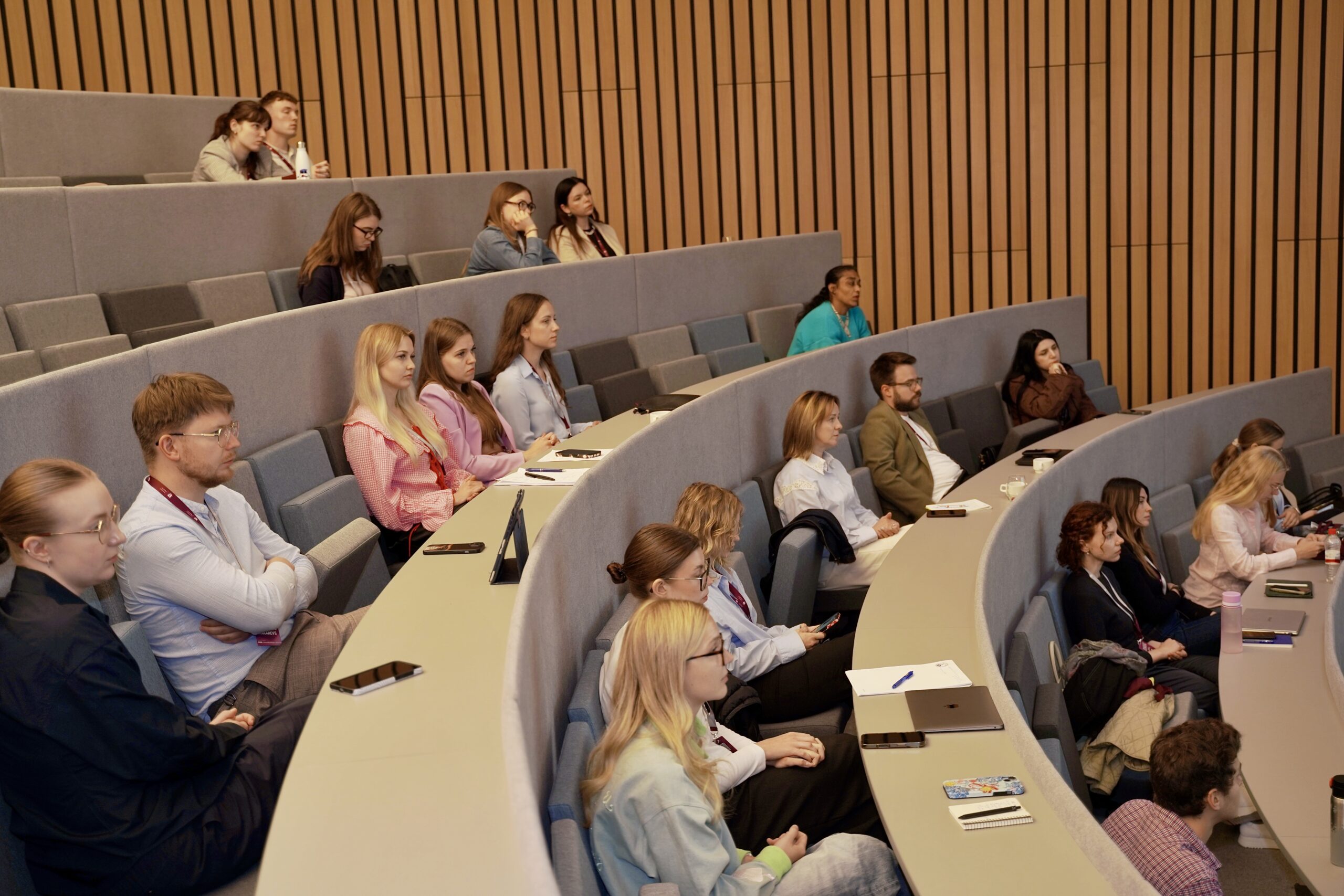 Moment of the Vilnius International Oncology Summer School / Photo by Marija Urtė Marčiulionytė
There was a traditional Meet & Greet activity during which the VIOSS participants cooked dinner together in international teams, helping them to get to know each other better. This symbolic activity served as a reminder that successful research and the best decisions in medicine alike, arrive through cooperation, the sharing of diverse experiences and by building trust-based teams.
One of the VIOSS days was devoted to fundamental cancer research. At the VU Life Sciences Center, the participants expanded their knowledge of cancer development molecular mechanisms, the application of single-cell technologies, and the significance of the microbiome in oncology. Prof. S. Jarmalaitė presented the molecular mechanisms of cancer pathogenesis. Prof. Linas Mažutis from the Institute of Biotechnology introduced the potential of single-cell technologies in contemporary cancer research, while Prof. Eglė Lastauskienė from the Institute of Biosciences discussed the role of the microbiome in cancer development and treatment.
During the practical part of the programme, the participants visited the VU LSC laboratories, interacted with the scientists and close up, familiarised themselves with the advanced research infrastructure and the methods employed. The fundamental sciences’ day concluded with a lecture from junior researcher at the VU LSC Institute of Biosciences, Kamilė Normantaitė entitled: Decoding the Complexity of Cancer Metastasis: Intrinsic Potential or Evolutionary Acquisition, which addressed the biological mechanisms of metastasis, tumour evolution, and the most recent avenues of experimental and clinical research on metastases.
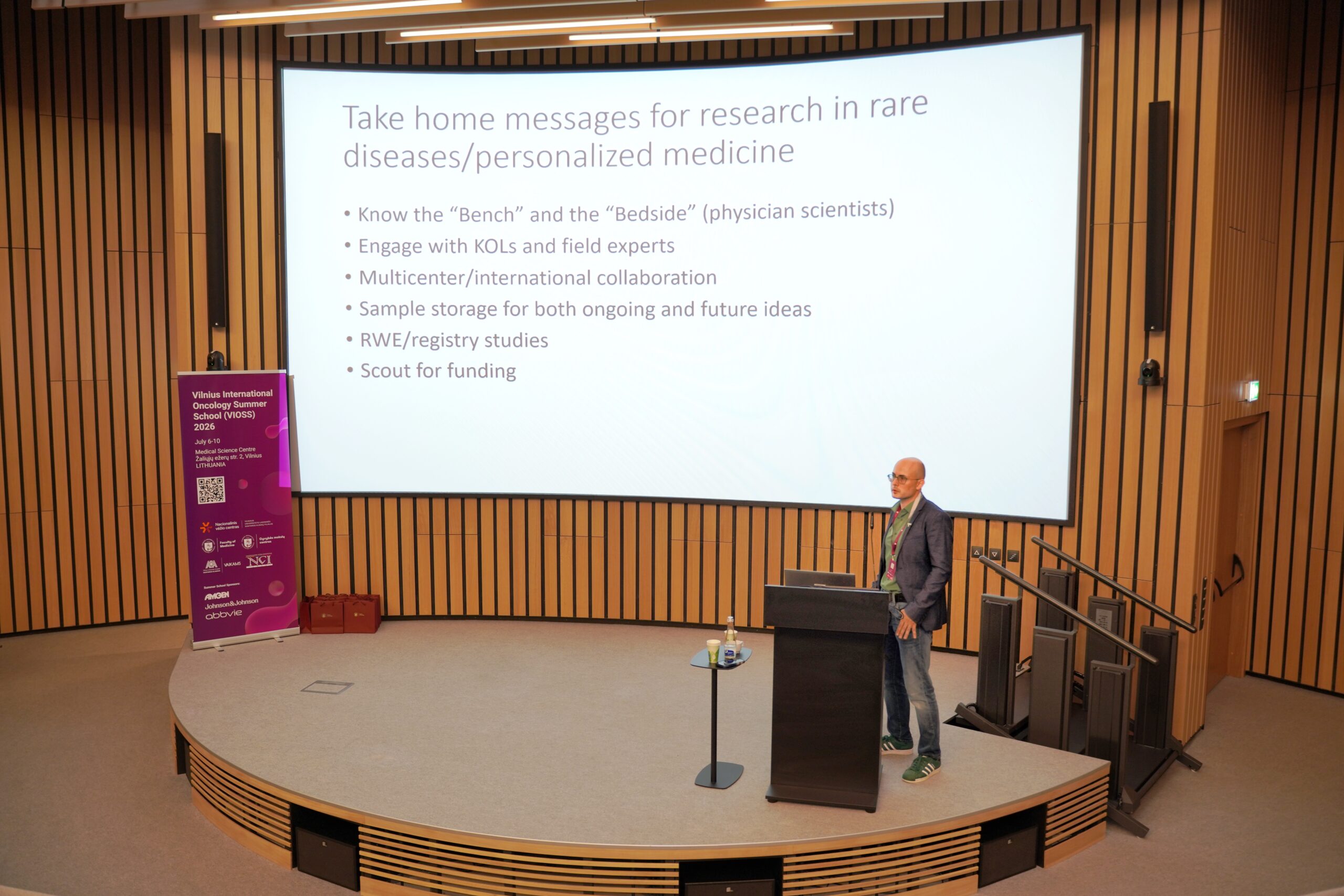 Moment of the Vilnius International Oncology Summer School / Photo by Marija Urtė Marčiulionytė
A visit to the Children’s Hospital of Vilnius University Hospital Santaros Klinikos was another part of the programme, with the focus on paediatric oncology and haematology. Medical paediatric oncohaematologists, Prof. G. E. Vaitkevičienė and Prof. Sonata Šaulytė-Trakymienė, orthopaedist-traumatologist, Dr Rimantas Zagorskis, and oncopsychology expert, Aušrinė Kėvalaitė, presented the special characteristics of paediatric oncology, multidisciplinary teamwork, and the clinical challenges inherent to this area. The participants had the opportunity to familiarise themselves at a close range with one of the most advanced centres of paediatric oncology in the region.
Assoc. Prof. G. E. Vaitkevičienė emphasised that the integration of paediatric oncology into the summer school programme was one of the key features of this year. “It is very important for the upcoming oncology specialists to realise, as early as possible, that paediatric oncology is not just a smaller version of adult oncology; it is an independent area with its own distinctive biological mechanisms, treatment principles, and requirements for the patient and their family. Nowadays, the majority of children who get oncological diseases recover; however, their journey does not end there. Having such diseases in childhood, a significant risk of late treatment complications remains, increasing the probability of chronic disease development and much higher morbidity in adulthood. It is therefore vital for future specialists to understand the specifics of cancer treatment in children as well as the long-term monitoring of such patients during their entire life path after their treatment. I am happy that a whole day was devoted to paediatric oncology in the VIOSS programme allowing the participants to familiarise themselves with our everyday work, our multidisciplinary team activities, and the importance of long-term care”, she explained.
The fourth day of VIOSS was devoted to visiting the surgery block of the National Cancer Center and hearing about the advanced cell therapies and translational research on malignant haematological diseases. The participants were received by haematologists from the Hematology, Oncology and Transfusion Medicine Center. Dr Adomas Bukauskas presented on the potential of mesenchymal stromal cell and virus-specific T-lymphocyte therapies, while Dr Skirmantė Černiauskienė familiarised the participants with the advanced CAR-T cell therapy, discussing its manufacture at the point-of-care, and its clinical application for the treatment of malignant haematological diseases. Dr Andrius Žučenka gave a lecture on the clinical and translational research on acute myeloid leukaemia presenting the most recent avenues of targeted therapy and immunotherapy that allow for the transposition of scientific discoveries into clinical practice at a faster rate.The scientific week ended with the Pitch Session where participants in international teams presented innovative ideas developed throughout the week. The commission assessed their scientific authenticity, innovativeness, and potential to contribute to future oncology solutions. The team, comprised of Victor Okika, Marius Perminas, Zane Raduša (Latvia), Agnese Broccolo (Italy), Larysa Laktionova (Ukraine), and Dovilė Čerkauskaitė who presented on the anxiety evaluation of individuals with colorectal cancer, were awarded first place.
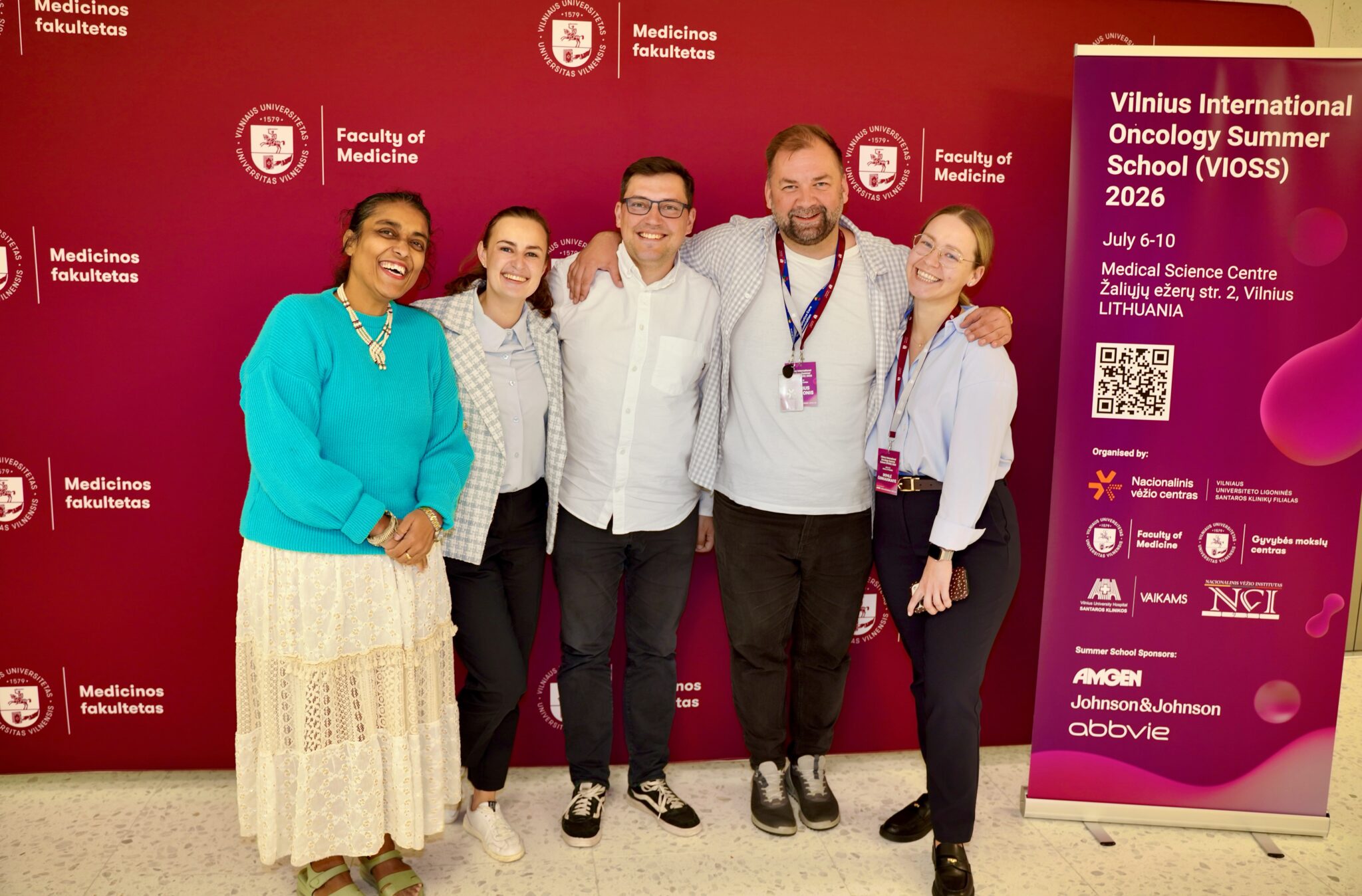 Participants of the Vilnius International Oncology Summer School / Photo by Marija Urtė Marčiulionytė
The final day addressed comprehensive patient care and future perspectives in oncology. Medical anthropology specialist from the University of Tartu (Estonia), Assoc. Prof. Dr Piret Paal spoke about the relevance of palliative care in contemporary oncology, whereas the medical physicist, Head of the Radiation Oncology Center of NCC, Prof. Jonas Venius, presented the possibilities of theranostics. Biomedical researcher, Dr Ieva Ailte (University of Oslo), discussed the role of biomarkers in translational research and personalised treatments.
According to the organisers, VIOSS 2026 once again confirmed that Lithuania is becoming an important international platform for the development of young oncology specialists, doctors, and scientists. A member of the steering committee, Assoc. Prof. Dr K. Ažukaitis, expressed his delight concerning the rapid growth in the recognition of the event across the international academic community: “Every year, we see an increasing interest in VIOSS. We are receiving more and more applications from different European countries; simultaneously, the scientific focus of the event is strengthening too. We are paying increasingly more attention to clinical knowledge as well as our scientific thinking, research methodology, and the ability to critically assess the scientific evidence.”
Meanwhile, Prof. S. Jarmalaitė emphasised that the summer school offered a unique opportunity for the young specialists to familiarise themselves with the potential of Lithuanian science: “The visit to the Life Sciences Center became one of the most prominent experiences of the summer school. The participants familiarised themselves with our research infrastructure, study opportunities, and newest research. It is exciting to see young people from various countries leaving with their knowledge enriched and excellent impressions of Lithuania and its science too.”
Assoc. Prof. Dr V. Pečeliūnas noted that this summer school was turning into an excellent example how joint work strengthens the Lithuanian oncology system. “VIOSS illustrates very well the meaning of genuine partnership. On the way towards a comprehensive cancer centre, we can clearly see the strength of the collaboration and fellowship between the National Cancer Center, Vilnius University, the Life Sciences Center, Children’s Hospital of Vilnius University Hospital Santaros Klinikos, and other partners. This proves that we have one strong oncology community in Lithuania that works concertedly for the sake of scientific progress, innovation, and improved patient care.”
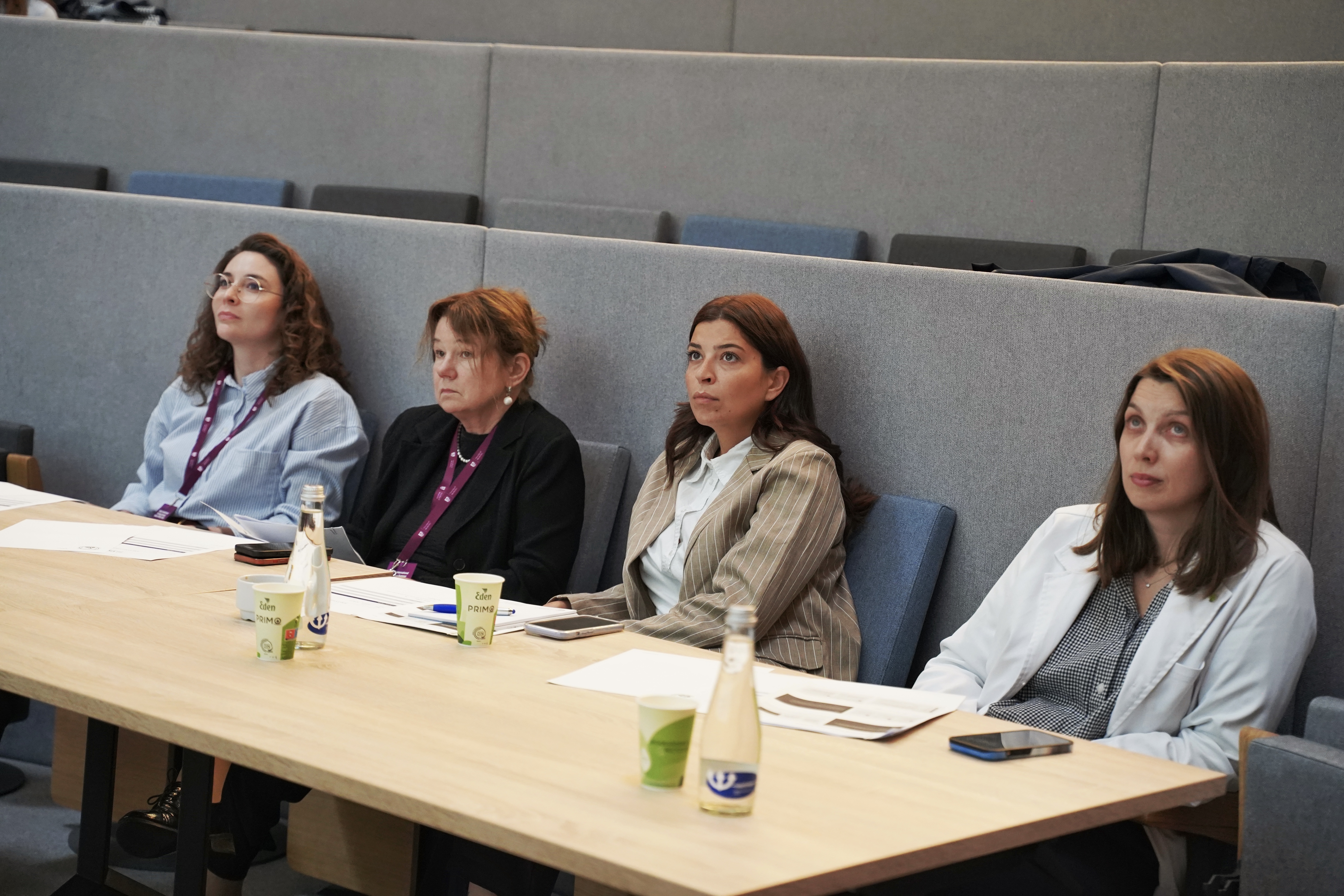 Moment of the Vilnius International Oncology Summer School / Photo by Marija Urtė Marčiulionytė
According to one of the VIOSS initiators, M. Čiurlionis, the success of the event encourages the planning of a new stage in terms of quality and the interest in the event exceeds expectations every year: “We see that the young specialists don’t just search for isolated lectures but for a comprehensive experience allowing them to understand the entire ecosystem of modern oncology – from the laboratory to the patient.” According to Čiurlionis, plans to expand the summer school further are already underway. It is expected that from 2028, training sessions could be organised in two parallel directions, but both devoted exclusively to the field of oncology. “One of them will be oriented to clinical oncology – diagnostics, treatment, multidisciplinary work, and patient care, and the other, to fundamental and translational scientific research in oncology, encompassing tumour biology, molecular mechanisms, the development of new technologies, and their transposition into clinical practice. Thereby, we will be able to meet the different needs of young doctors and researchers even better and maintain the highest academic quality.”
The organisers of VIOSS 2026 believe the event proved once again that modern oncology is not limited to treatment only. This is a field in which fundamental science, clinical practice, innovation, multidisciplinary partnership, and a common aim to improve the quality of life for patients, all merge together. In the near future, the organisers expect VIOSS to become one of the most important platforms for the development of young oncology professionals in the Nordic and Baltic region and to contribute to the training of a new generation of doctors and scientists in Europe.
Photo gallery (by Marija Urtė Marčiulionytė):


