Meeting of the Council of the Faculty of Medicine
The agenda for the Council meeting will be announced after December 5.
We would like to inform you that the diploma awarding ceremonies for the 2026 graduates of the Vilnius University Faculty of Medicine will take place at the Church of St. Johns (Šv. Jono g. 12, Vilnius). The Faculty of Medicine diplomas will be awarded in five separate ceremonies:
Considering the nature of the event, we kindly invite you to attend in formal or festive attire and wearing Vilnius University insignia.
There is no tradition of wearing academic gowns among students of the Faculty of Medicine. However, VU has a long-standing and proud tradition of wearing student caps, which we encourage you to wear for this special occasion.
You can purchase a student cap at the Vilnius University merchandise store located at Šv. Jono St. 12, Vilnius (entrance from Pilies St.), online, or during the diploma ceremonies in the University’s Grand Courtyard (card payments only).
We would like to inform you that the diploma awarding ceremonies for the 2026 graduates of the Vilnius University Faculty of Medicine will take place at the Church of St. Johns (Šv. Jono g. 12, Vilnius). The Faculty of Medicine diplomas will be awarded in five separate ceremonies:
Considering the nature of the event, we kindly invite you to attend in formal or festive attire and wearing Vilnius University insignia.
There is no tradition of wearing academic gowns among students of the Faculty of Medicine. However, VU has a long-standing and proud tradition of wearing student caps, which we encourage you to wear for this special occasion.
You can purchase a student cap at the Vilnius University merchandise store located at Šv. Jono St. 12, Vilnius (entrance from Pilies St.), online, or during the diploma ceremonies in the University’s Grand Courtyard (card payments only).
We would like to inform you that the diploma awarding ceremonies for the 2026 graduates of the Vilnius University Faculty of Medicine will take place at the Church of St. Johns (Šv. Jono g. 12, Vilnius). The Faculty of Medicine diplomas will be awarded in five separate ceremonies:
Considering the nature of the event, we kindly invite you to attend in formal or festive attire and wearing Vilnius University insignia.
There is no tradition of wearing academic gowns among students of the Faculty of Medicine. However, VU has a long-standing and proud tradition of wearing student caps, which we encourage you to wear for this special occasion.
You can purchase a student cap at the Vilnius University merchandise store located at Šv. Jono St. 12, Vilnius (entrance from Pilies St.), online, or during the diploma ceremonies in the University’s Grand Courtyard (card payments only).
We would like to inform you that the diploma awarding ceremonies for the 2026 graduates of the Vilnius University Faculty of Medicine will take place at the Church of St. Johns (Šv. Jono g. 12, Vilnius). The Faculty of Medicine diplomas will be awarded in five separate ceremonies:
Considering the nature of the event, we kindly invite you to attend in formal or festive attire and wearing Vilnius University insignia.
There is no tradition of wearing academic gowns among students of the Faculty of Medicine. However, VU has a long-standing and proud tradition of wearing student caps, which we encourage you to wear for this special occasion.
You can purchase a student cap at the Vilnius University merchandise store located at Šv. Jono St. 12, Vilnius (entrance from Pilies St.), online, or during the diploma ceremonies in the University’s Grand Courtyard (card payments only).
The European Society of Clinical Microbiology and Infectious Diseases (ESCMID), together with Vilnius University, Faculty of Medicine, and partners, are organizing a postgraduate course ’’Optimising Management of Tuberculosis and Mycobacterial Infections with Genomic Approaches’’ which is intended for mycobacteriology experts with a good background knowledge on conventional phenotypic testing and molecular-based diagnostic and young clinicians in training managing mycobacterial infections.
Date: September 9-11, 2025
Venue: Vilnius University, Faculty of Medicine, Medical Science Center, Žaliųjų Ežerų st. 2, Vilnius, Lithuania
The Course objectives:
For more information about the course, please visit the official website: link.
The seminar "Preserving Anatomies: Current Perspectives on the Restoration of Potted Remains" will take place on June 16 at 2:00 p.m. at the Faculty of Medicine of Vilnius University.
The seminar will be led by Dr. Giovanni Magno and Dr. Lara Endrizzi, representatives of the Museum Center of the University of Padua.
The Museum Centre of the University of Padua brings together eleven museums and eighteen historical collections, working closely together to preserve a rich historical, scientific and artistic heritage for research purposes. Recently, much attention has been paid to the conservation and restoration of biological specimens – dating from the 18th century to the present day. The seminar will present innovative solutions aimed at standardizing conservation protocols for exhibits, improving their preservation and public accessibility. This collaborative approach not only ensures the protection of historical collections, but also revives their educational and scientific potential.
The event will take place in the main auditorium of the Faculty of Medicine (203), Čiurlionio g. 21.
The Centre for Human Bioarchaeology and Palaeogenetics at the Institute for Translational Health Research, Faculty of Medicine, Vilnius University (VU), is inviting to a hybrid lecture by Dr. Lehti Saag, a researcher at the Institute of Genomics, University of Tartu, entitled „North Pontic crossroads: Mobility in Ukraine from the Bronze Age to the early modern period“. The northern lands of the Black Sea, which encompass present-day Ukraine, were once a migratory crossroads linking the vast Eurasian steppe with Central Europe. The study focused on the remains of individuals dating from around 7000 BC to 1800 AD. The complete ancient genomes of 91 individuals were analysed to investigate the history of migration and mobility in this region. In particular, it focused on historically defined migratory groups in the Iron Age and Medieval period. The study revealed a great diversity of ancestral origins and genetic links with different Eurasian groups over time: a great diversity of ancestral origins was found even within geographically, culturally and socially homogeneous groups. Despite this diversity, it has been observed that the genetic components common in eastern and central Europe have been present in the Ukrainian region since the Bronze Age, and that, over the millennia, a high degree of genetic diversity has developed there as a result of frequent movements, assimilation and contacts.
Everyone interested in history, archaeology, population genetics and ancient DNA research is welcome.
Date and time: the 2nd of April, 2025, at 2:00 p.m.
Venue: the lecture will take place at the VU Faculty of Medicine, Medical Science Centre, Orange Conference Hall (D1-16.1), Žaliųjų Ežerų str. 2, Vilnius. Remotely – in MS Teams. Link to join.
The lecture will be held in English.
There is no registration for the event, admission is free. Follow the event on Facebook.

ABOUT THE SPEAKER
Dr. Lehti Saag investigates population genetics and ancient DNA. Her doctoral research at the University of Tartu, Estonia, were focused on the Eastern Europe population history, Estonia and Western Russia in particular. From 2021 to 2023 she was a Marie Sklodowska-Curie fellow at University College London, Molecular and Cultural Evolution Laboratory (under supervision of Prof. Mark Thomas), where she has made a research on the demographic history of Ukraine. Now, she has returned to Estonia and is currently a Research Fellow of Ancient DNA and Manager of Ancient DNA Facilities in the Institute of Genomics, University of Tartu.

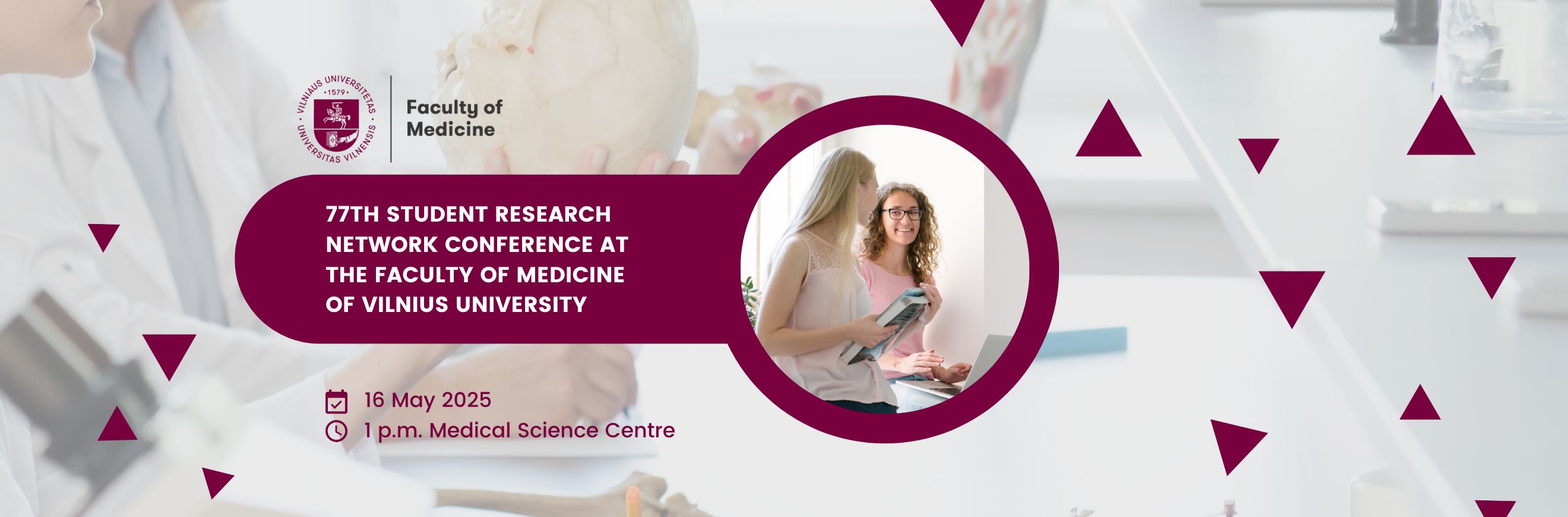
The Faculty of Medicine of Vilnius University is organising the 77th Vilnius University Faculty of Medicine Student Research (SRN) Network Conference in 2025 and invites you to participate.
This is a unique opportunity for faculty students, academics, and administrative staff to engage in discussions, share experiences, listen to the most exciting presentations by students and lecturers, get involved in scientific research, and establish valuable connections.
During this conference, students will present research conducted in scientific groups in collaboration with Vilnius University Faculty of Medicine (VU MF) researchers, as well as findings from interesting clinical cases and various analyses. Presentations will be delivered by students from the Vilnius University Faculty of Medicine—winners of the first places in SRN sections.
Plenary Conference Date & Time: May 16, 2025, 1 p.m.
Venue: Vilnius University Faculty of Medicine, Medical Science Center, Conference Hall D1-16.1, Žaliųjų Ežerų g. 2, Vilnius.
Attention! The has now been published. You can find it here.
- - -
SRN Section Presentations: April 28-May 9, 2025 (inclusive).
Presentation Section Guidelines:
Thesis Requirements:
Thesis Structure:
Note! The order of supervisor credentials should be as follows: First, the position or academic title (e.g., Prof., Assoc. Prof.), followed by the scientific degree (e.g., Habil. Dr., Dr.).
Thesis Templates can be found here.
For inquiries, please contact:
Urtė Žakarytė
Mobile: +370 612 01272
E-mail:

Dr. Anna Cereseto, the Principal Investigator of the Laboratory of Molecular Biology at the University of Trento will present a seminar “Advancing genome editing technologies for therapeutic applications” at the VU Life Sciences Center on January 17 (Friday) 10:00-11:00 EET in R101 auditorium.
Abstract:
Genome editing technologies hold great promise for clinical development, offering the potential to transform the treatment landscape for genetic disorders and diseases targeted by immunotherapies. By enhancing the precision and efficiency of gene therapies, these technologies lay the foundation for more personalized and advanced treatments. However, several challenges hinder the widespread adoption of genome editing in clinical practice. These challenges stem primarily from the limitations of CRISPR-based tools, including their low compatibility with commonly used delivery vectors, constraints on target sequences, immunogenicity, and unpredictable efficiency and precision across the genome.
Our recent work has focused on overcoming these obstacles by employing two key strategies: the discovery of novel CRISPR systems and the use of directed evolution approaches, coupled with molecular engineering to improve compatibility with gene therapy applications. In this presentation, I will outline the discovery pipeline we’ve developed to advance new genome editing tools and explore their potential applications for the treatment of cystic fibrosis, one of the most prevalent and debilitating genetic diseases.
There will be slots after the talk for individual meetings with researchers interested in collaboration with Dr. Anna Cereseto. Please contact Dalia to reserve the time: .

Join us for a presentation by Dr. Artur Yakimovich, a group leader at Helmholtz-Zentrum Dresden-Rossendorf (HZDR), Germany: Novel Machine Learning Approaches to Study Infection and Disease through Biomedical Images
Date and time: 25th September at 11:00
Place: Life Sciences Center, Sauletekio av. 7, Vilnius LT-10257
For those who cannot attend live but would like to join the seminar online (MS Teams): https://bit.ly/3Bfn0q4
Group Leader at Helmholtz-Zentrum Dresden-Rossendorf (HZDR), Germany
Data Scientist at Roche AG
VU Faculty of Medicine and Life Science Center are organizing the international conference "Translational Research: Bridging Gaps, Improving Lives" to celebrate the opening of the new VU MF Center for Medical Research. Scientists and healthcare professionals from all disciplines working towards improving health outcomes are invited to the event.
Date: October 4, 2024
Venue: Center for Medical Research, Zaliuju ezeru str. 2, Vilnius
Partners: Eureka Institute for Translational Medicine, Future Biomedicine Foundation
Endoresed by: Junior Academy of the Lithuanian Academy of Sciences, Lithuanian Junior Doctors Association
Despite the growing number of advances in many scientific fields, only a small fraction of these discoveries eventually translate into clinical practice and improved health. The "translation" of scientific knowledge from the laboratory (bench) to patient's bedside is a complex journey, requiring close collaboration between fundamental biomedical sciences and clinician researchers.
Translational research offers an opportunity to bridge the 'valleys of death' between basic and clinical science and to bridge the gap between scientists and healthcare professionals in different fields.
This first event dedicated to translational research will feature keynote lectures by researchers, educators, and leaders from the world's leading translational research institutions.
During the event, you will also have the opportunity to be one of the first to see the VU MF Center for Medical Research and take part in a dynamic translational ideas pitch session.
Whether you are an academic, a healthcare professional, an early career researcher or a policy maker, this conference will provide invaluable insights into how translational science can shape the future of healthcare and improve people's lives.
ATTENTION! REGISTRATION FOR THE EVENT HAS BEEN SUSPENDED AS THE MAXIMUM NUMBER OF PARTICIPANTS HAS BEEN REACHED.
CHECK THE CONFERENCE PROGRAMME HERE
Are you working on a research project translating knowledge from bench to bedside (or back)?
Does your project involve personalized medicine approaches or multidisciplinary collaboration aiming to improve patient care?
We invite PhD students and researchers to present their ideas in the special translational research pitch session supported by the Future Biomedicine Foundation.
Each presenter will give a brief 3 minutes pitch followed by 2 minutes of questions and comments from the expert panel. The best translational research pitch will be awarded a prize of 2000 EUR. Selected presenters will be invited to submit a full proposal to the Future Biomedicine Foundation.
We are waiting for your translational research proposal idea by September 23rd, 2024. Selected presenters will be informed by September 27th, 2024.
Submit your translational research pitch here by September 23.
Contact person: Diana Bašinskaitė, e-mail. , phone (8 5) 2365019

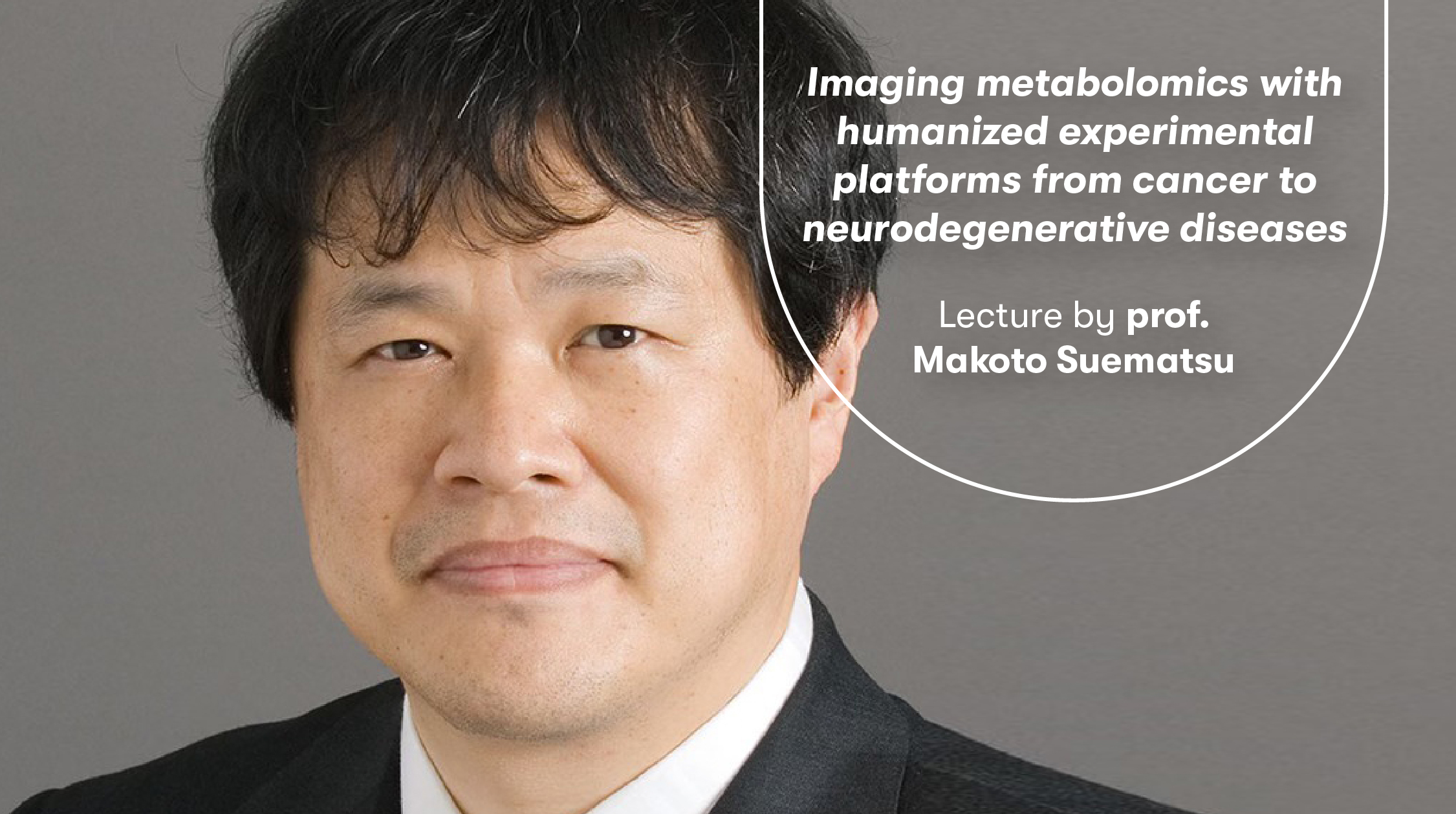
We invite you to a lecture by Prof. Makoto Suematsu titled "Imaging Metabolomics with Humanized Experimental Platforms from Cancer to Neurodegenerative Diseases," which will take place on June 6, 2024, at 11:00 AM in the Red Auditorium (E122) of Vilnius University Hospital Santaros Clinics. The lecture is expected to last 1 academic hour.
Prof. Makoto Suematsu is a world-renowned scientist, the president of the Japan Agency for Medical Research and Development, a member of numerous international organizations, and a member of the International Advisory Board of the Faculty of Medicine at Vilnius University. In 2018, he was awarded the Officer's Cross of the Order for Merits to Lithuania.
Prof. Makoto Suematsu heads the Central Institute for Experimental Animals in Japan. The institute's main research areas include genetics, oncology, immunology, hematological disorders, and more, making its collaboration spectrum exceptionally wide. The professor's scientific interests encompass microcirculation physiology, metabolomics, biomarkers, gas biology and medicine, rare diseases, oncology, hematology, and genetics.